


“Masculine office” does not have to mean a leather chair, a giant TV, and a lonely desk surrounded by beige. A well-styled masculine home office can feel layered, thoughtful, and even a little soft, with books, family photos, and plants that make the room feel lived in rather than like a dorm room with a stock market monitor.
Here are some seriously good home offices to inspire a sophisticated, lived-in space, along with the design moves worth borrowing.
Dark Color Palettes
A dark office can create a masculine style without requiring cave-black paint. Deep colors are one way to shape the room’s mood.
Glass doors and a pale rug help keep the office bright. Dusty blue-gray built-ins cover the room, with a vintage wood desk in front of them and shelves filled with books, baskets, and art beneath brass picture lights. Bria Hammel Interiors designed the strong, tailored space.

A rolling library ladder stands among the floor-to-ceiling cabinetry, while exposed wood beams and thick drapery add texture. The pine green office also includes a deep leather lounge chair, creating a cozy library mood without feeling heavy. The Habitat Collective designed it.

The office designed by Jaye Studio uses white walls, a dark desk, darker flooring, warm tan counters, and a landscape painting to create contrast. This dark-light balance gives the room a grounded mood, while rich blue, charcoal, pine green, and tobacco brown add depth. Choosing paint can bring some uncertainty, especially when deciding how dark the office should be.
- Use deep navy paint on the built-ins or an accent wall. If you choose the wall, place it behind the desk.
- Keep the ceiling light while painting the walls charcoal. This lets the darker walls shape the office without making the ceiling part of the same deep color field.
- With light walls, a dark ceiling can create a cozy, enveloping effect and visually connect the upper part of the room to the rest of the design.
Choose one hero color instead of relying on multiple gray shades.
Structured Furniture
Masculine office style benefits from structure, but masculine furniture does not need to be boxy or uncomfortable. Cleanly shaped pieces can give the room definition without making it feel rigid.

Brick walls frame squared taupe built-ins and a chunky desk made from rustic wood. The organized shelves stay work-ready, while a navy striped rug adds softness to the room. Moore House Interiors designed the office to combine masculine function and softness.

Thin architectural shelving and vertical slatted paneling bring order to the office designed by Lina Jabre Interiors. The L-shaped desk has a long horizontal line, and the room feels calm and efficient. Avoid curvy, fussy legs.

Layered art fills the built-ins without creating visual clutter. Behind the navy curved waterfall desk, a tall sculptural chair with a wingback-like profile adds height, while the desk’s bold shape gives the office a tailored look. Ehrlich Interiors designed the room.
Use the room’s scale and layout to determine how much structure and visual weight the furniture should carry.
- Subtle curves can soften rectangular forms, while simple silhouettes keep the furniture looking clear and organized. Avoid overly ornate legs.
- Choose a substantial desk that the room can visually accommodate. A tiny desk can appear nervous in a larger office.
- Place leather guest chairs across from the desk to make the seating area feel intentional. Upholstery adds softness without relying on fussy furniture legs.
Leather Wood Metal
Leather, wood, and metal are the main materials associated with masculine offices. They can appear in furniture, shelving, lighting, and smaller office details.

Wood paneling and a vintage-looking rug set the backdrop for a glossy dark desk and a tufted black desk chair. A large globe, metal lamp, brass accents, and books with visible spines keep the study from having a one-note appearance. The room uses wood and leather.
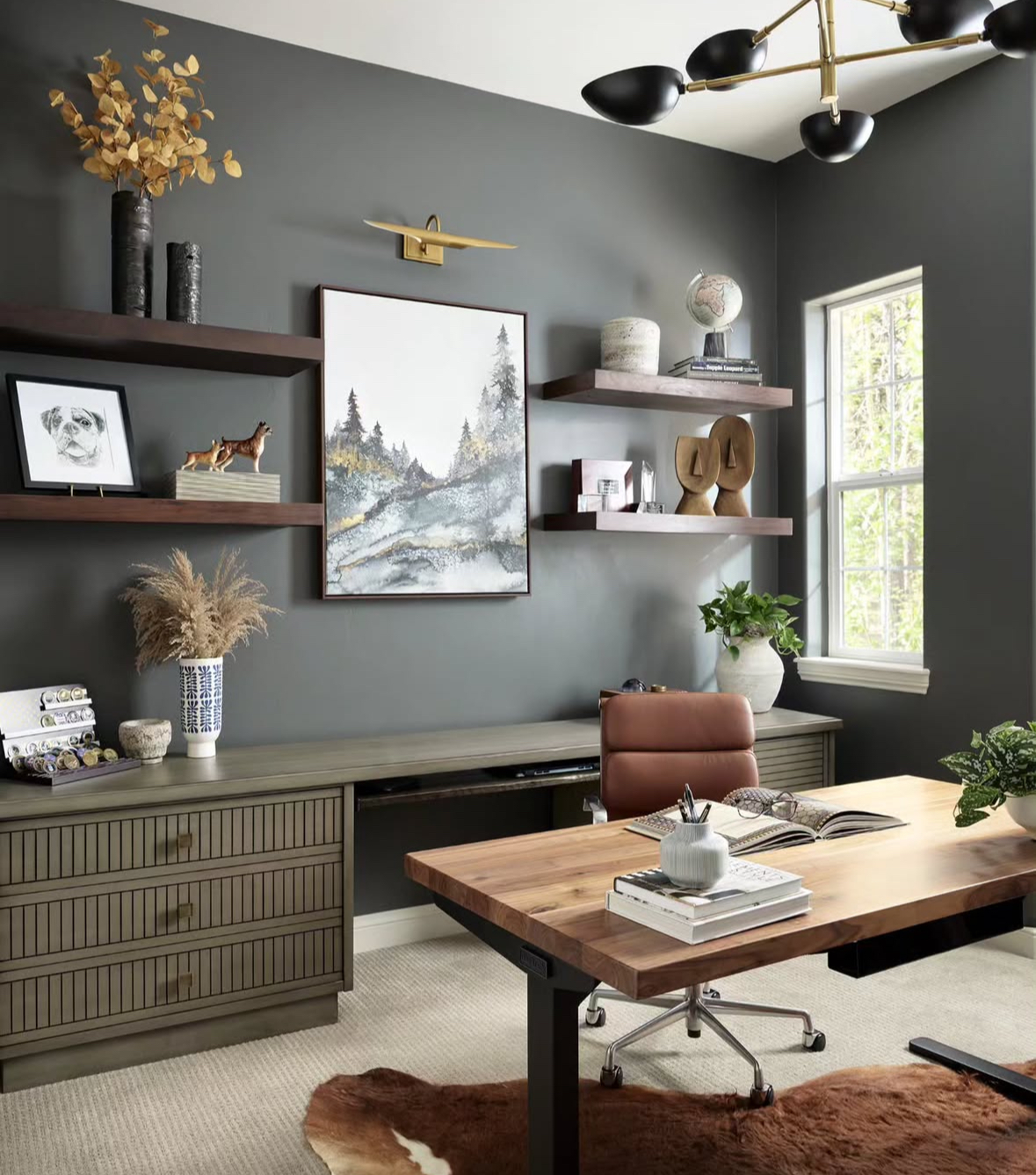
A misty mountain landscape hangs above the warm wood desk, with floating shelves set against deep gray walls. The office also includes a hide rug and a cognac leather task chair, and the leather prevents the room from feeling cold. Julie Kay Design Studio designed it.

On top of the honey-toned wood credenza, stacked books, branching greenery, sculptural objects, and a large black vase add texture. The office features a black angular desk, a soft leather chair, and enveloping taupe walls, with a restrained palette of matte black, warm wood, and soft leather. Monica Fried designed the space.
These three materials can form the office’s core palette, while varied finishes and proportions keep the room from feeling one-note.
- Replace a basic chair with a leather one. Faux leather is acceptable; the finish matters more than whether the material is genuine leather.
- Use wood for the desk and shelving rather than limiting it to picture frames. Larger surfaces make the material part of the office itself.
- Add metal through a desk lamp, cabinet hardware, or bookshelf. Avoid random decorative trinkets.
Character Lighting
A single uninspiring ceiling fixture can flatten an otherwise carefully designed office, so its form and placement deserve attention.
In masculine offices, lighting can use personality to shape the room rather than serving only as a basic source of light. Fixtures with a clear visual character are one option.

In an office by The Den Design Group, light wood cabinetry stands out against moody charcoal walls and a matching ceiling. An angular brass fixture with 3 saucer shades provides statement lighting.
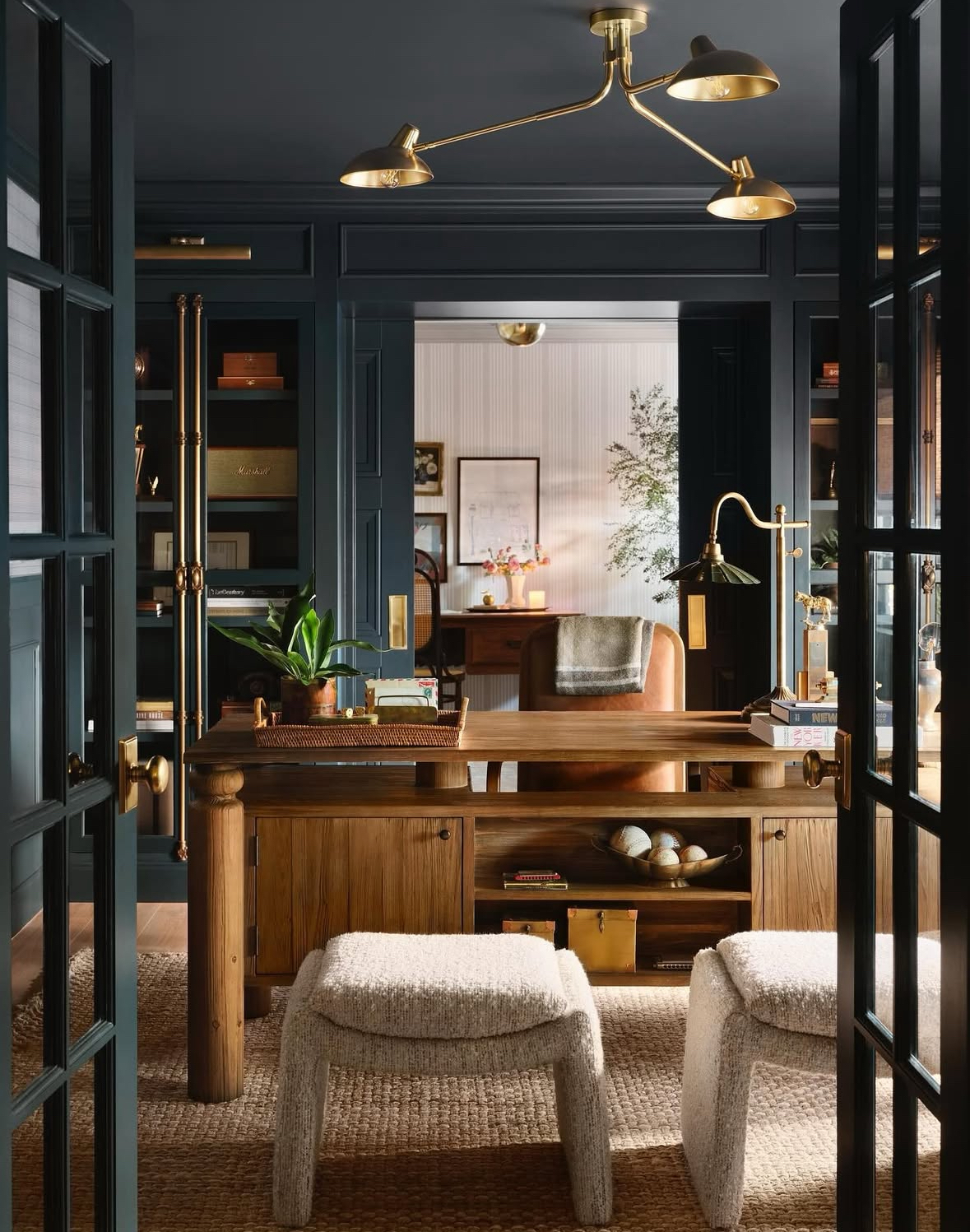
The deep blue office associated with Joanna Gaines uses layered lighting at warm overhead, eye-level, and task positions. Library-style picture lights illuminate the built-ins, while a brass ceiling fixture and a green-shaded banker lamp complete the lighting plan.
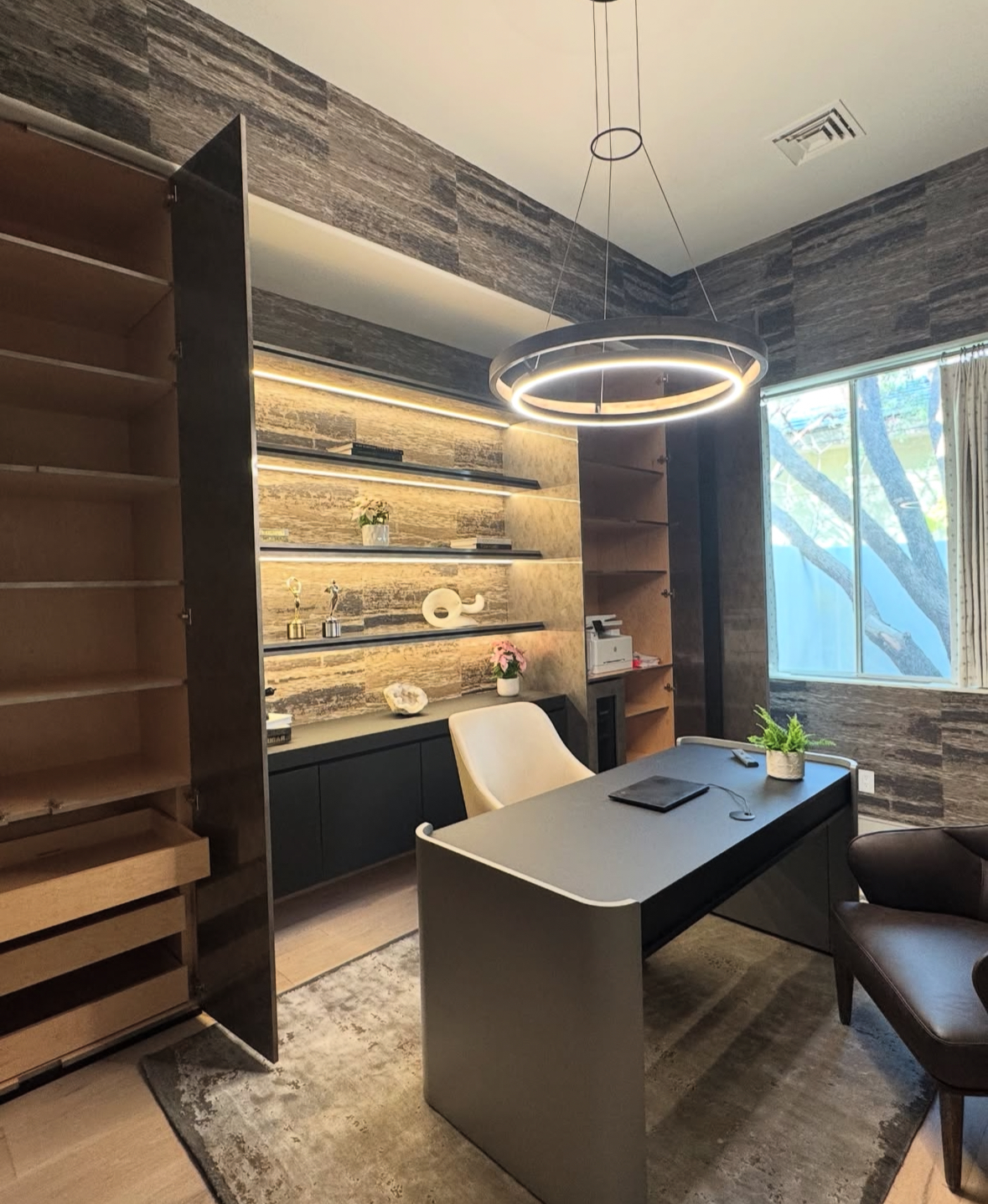
In the office designed by Inside Style, underlit shelves and a ring-shaped pendant over the desk bring a contemporary feel to the lighting. Stone-like wallpaper covers the wall behind these fixtures. If the office relies on a single overhead can, add other light sources so the room does not depend on one fixture.
- Use a statement pendant or chandelier as a focal fixture to bring the feel of restaurant lighting into the office.
- Place a modern desk lamp with a brass or black finish on the desk.
- Install picture lights or sconces on the built-ins or near art to give those areas their own light.
Unfussy Office Shelf Styling
Office shelves can quickly become cluttered when storage and decorative objects are placed without a plan. Baseball trophies and framed certificates need a deliberate arrangement rather than simply accumulating on the shelves.
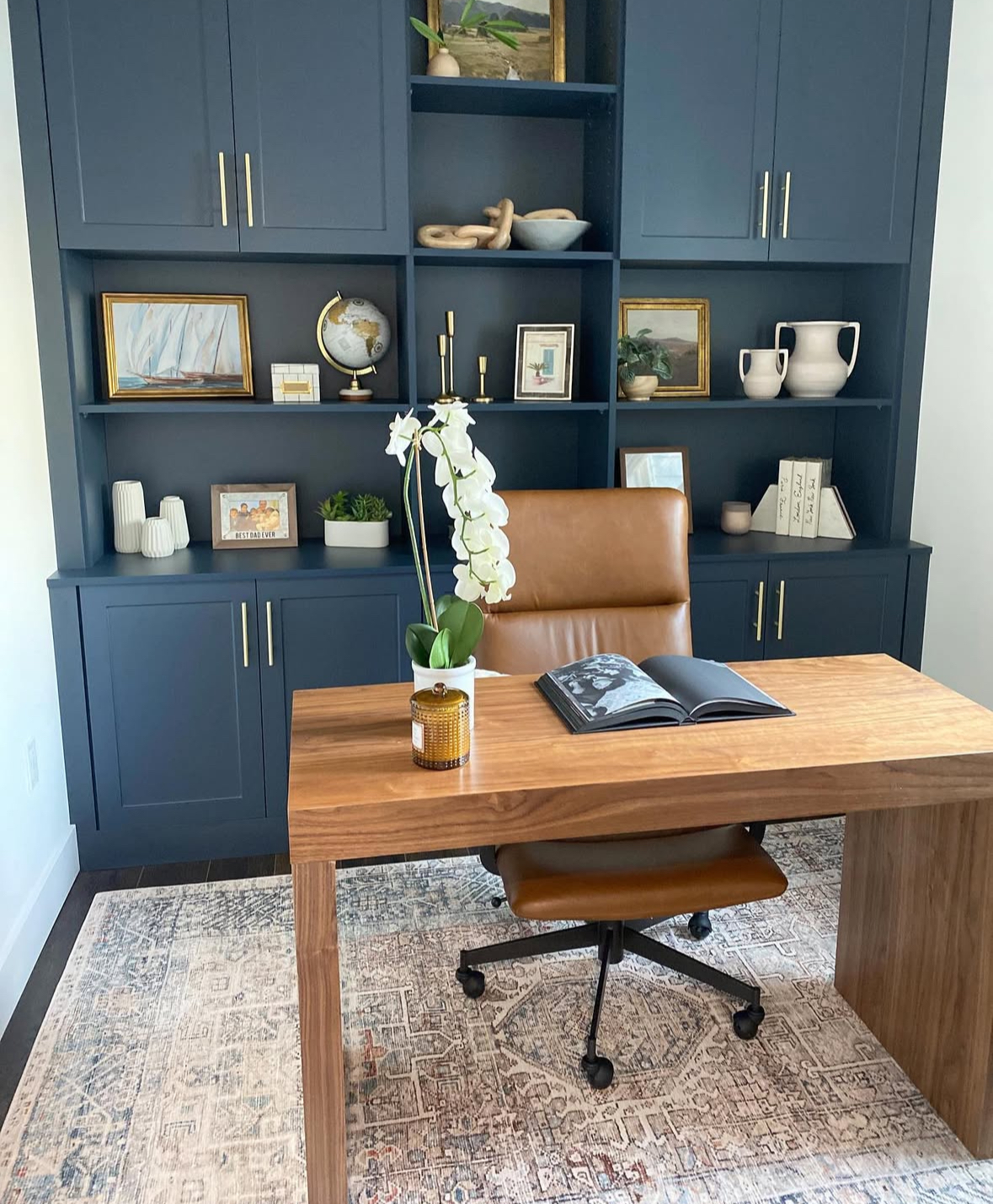
Binders remain easy to retrieve from these built-ins, which balance styling and access. Art leans casually against the back, while books are stacked vertically and horizontally alongside sculptural objects and plants. Tay Fusco Design created the arrangement.

Black metal open shelving designed by Gray Oak Studio holds books and framed photos, while woven baskets, greenery, and black-and-white pottery fill out the arrangement. The tight neutral-and-black palette gives the shelves a calm, modern look.
Simple rules can keep office-shelf styling consistent while leaving room for useful storage and selected decorative pieces.
- Choose a color story first, such as black, tan, and green or navy, white, and wood. Limit the decor to pieces that fit the chosen palette.
- Pair useful storage, such as a cord basket and receipt boxes, with decorative items such as sculptural bowls. This keeps storage integrated into the arrangement rather than separated from the decor.
- Leave some shelf space empty because the open area is part of the design.
Rotate the display items on one shelf instead of creating a permanent museum-like display. Awards and family photos can move around as the arrangement changes.
Office Personality
Personal choices—from hobbies to collections—can make the room feel specific to the person who uses it.

Deep wood tones and numerous books create a grounded backdrop for two floral swivel chairs. Raychel Wade designed the room, and the tailored details allow the floral upholstery to suit the office without feeling frilly.
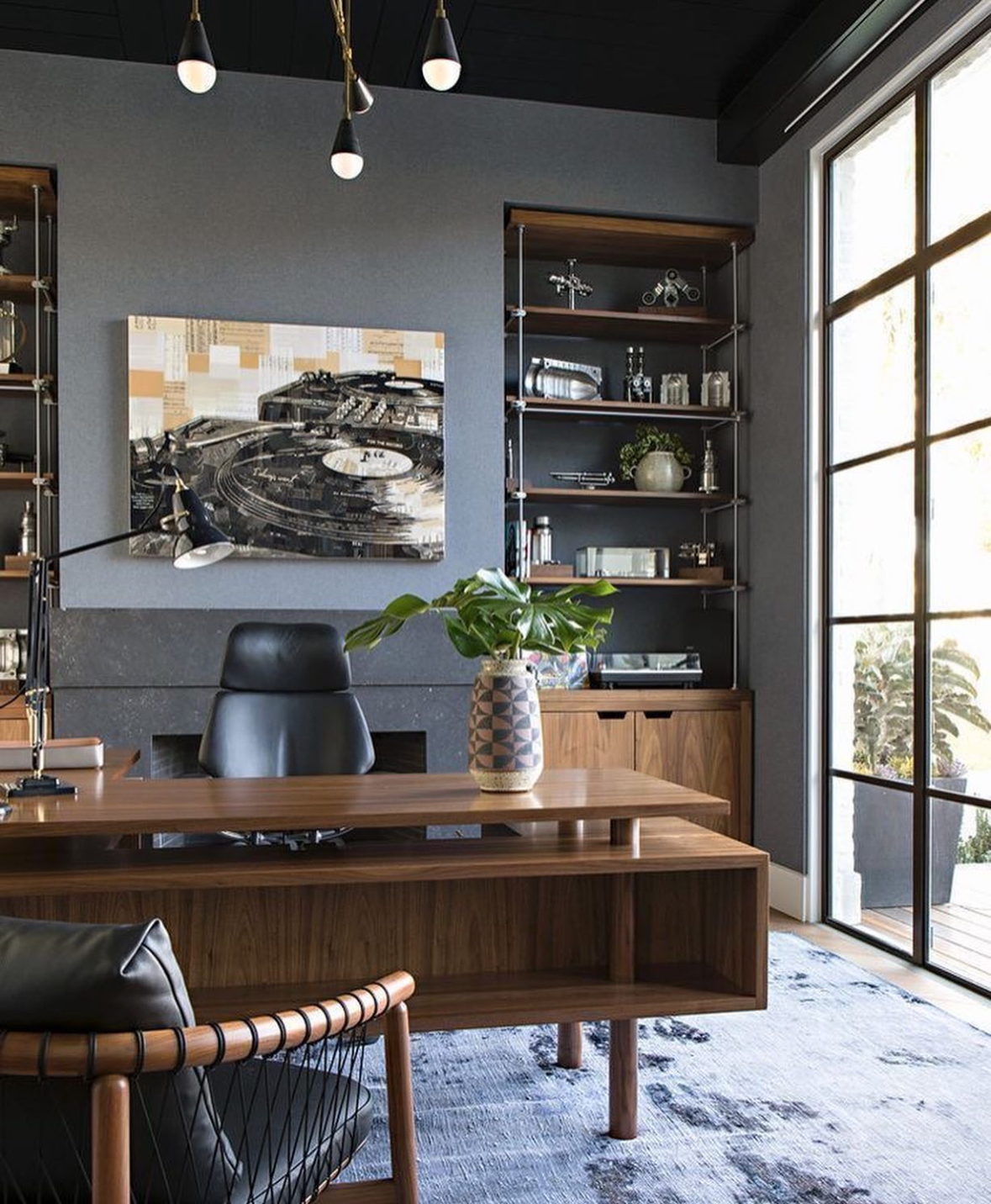
On sleek shelving, model airplanes and a bar setup sit beneath a large piece of art resembling a record player. Against gray walls, these details express the occupant’s interest in music. Personal interests can also appear through displayed collections, useful desk accessories, and small decorative references to hobbies.
Display a framed jersey, a vinyl collection, or hiking photos on the wall or shelves to reflect personal interests. Keep a leather journal on the desk and make sure it stays accessible. Decorative bookends can reference hobbies while holding books in place; choose forms connected to the hobbies you want the office to show. Keep the overall palette tight so personal pieces feel integrated rather than cluttered.