


Japanese garden decor can make a backyard feel quieter without filling it with more things. Think slow paths, simple plants, thoughtful stone details, and calm water features that feel livable in real outdoor spaces.
Becoming a Zen Person was never the plan. The whole idea began with a small, persistent annoyance.
It was the kind of feeling that appeared while sitting near a window with coffee at 7:18 a.m., looking at the outdoor space available and wondering why it seemed so loud.
Nothing was technically wrong. There was greenery, there was room, and there was no obvious problem, but the view still did not help the mind settle into calm.
Instead, the brain stayed in problem-scanning mode. Trying to relax while mentally reorganizing a cluttered shelf has exactly that same frustrating energy.
That is what led to Japanese garden decor: not a theme-park version or a strict replica, but a group of ideas that helps an outdoor space feel more peaceful through less clutter, more intention, and nature doing the final work.
Stones became part of the fascination too. A little attention to their placement can go a surprisingly long way.
Whether the space is a small patio, a shared yard, a narrow side area, or simply a view that needs softening, these ideas can help shape a Zen-like retreat that genuinely calms your nervous system.
Japanese Garden Design
Pauses are part of the visual pacing in a Japanese-style garden. Its limited features and composed layout leave room for negative space, with one or two key moments guiding attention.
Weathered stone and unplanned moss fit the idea of wabi-sabi, or beauty in imperfection. The unevenness is related to time and reads as age rather than neglect, while simplicity remains a design choice.
The term Japanese garden is more precise than the broad phrase Asian Zen garden decor because Japanese gardens use particular rhythms, materials, and arrangements.
A Japanese garden can use distinctive cues and rhythms to create a mysterious atmosphere through natural materials and asymmetry. Hide and reveal means partial visibility, so experience the garden gradually through movement or while sitting.
Comparing garden styles can make the choice clearer and help align the garden with the intended plan. The goal is planning clarity, not a pass-fail decision.
Japanese Garden and Zen Garden
| Feature | Japanese garden | Zen garden (karesansui) |
|---|---|---|
| Core vibe | A Japanese garden is naturalistic and layered, with a layout that is often made for strolling. | A Zen garden, or karesansui, keeps its design minimal and abstract. The mood is meditative. |
| Water | Japanese gardens use real water and may include ponds, basins, or streams. | In a Zen garden, water is usually symbolic. Raked gravel represents it. |
| Planting | Trees, shrubs, moss, and seasonal accents can all be part of a Japanese garden. | Planting in a Zen garden is very limited, with almost none in some designs. |
| Movement | Paths and stepping stones let you walk through a Japanese garden, often as part of the experience. | A Zen garden is designed for viewing from one spot rather than walking through it. |
| Key materials | Stone, wood, water, and plants are key materials in a Japanese garden. | Stone and gravel shape a Zen garden, where negative space is part of the design. |
| Best for | A Japanese garden works well in a small landscape yard, where its layered planting and paths can fill the space. | A Zen garden can fit into an outdoor corner when a calm and simple setting is the goal. |
Japanese Garden Styles and Their Uses
| Style | Felt Character | Typical Elements | Best Fit |
|---|---|---|---|
| Kyoto-style garden | Quiet, refined, temple-like | Framed views, restraint, contemplation | Small to medium yards with a calm mood |
| Edo-style garden | Scenic, expansive, strolling | Ponds, bridges, lanterns, large vistas | Large yards, strolling paths |
| Tea garden, also called chaniwa | Ritual pace, intimate, grounded | A tsukubai basin, stepping stones, and subtle gates | Courtyards, side yards, entry paths |
| Stroll garden | Storytelling through movement | Meandering paths and layered focal points | Any yard where you want to encourage exploration |
Surface, color, and material choices can help connect the selected design style to the rest of the garden. Choose a style to support cohesive choices, but style selection is not a pass-fail decision.
Paths and Stones

A change in movement pattern can change the feeling of a yard. Adjusting the route through the space is one way to alter that feeling.
A straight path communicates a direct task orientation, while a meandering path moves more slowly and communicates breathing space.
Test-walk the stepping stones before placing them permanently, then adjust the spacing to match a natural stride. Japanese stepping stones can encourage attention, but they should not feel overly precious.
The space between stones softens their edges and can hold gravel or moss. Leave a few inches between them so the path does not look like patio leftovers.
Natural stone is a preferred material for garden paths, and granite paving is durable, ages well, and has a grounded appearance. It can still suit a yard that is establishing its look.
A granite stepping stone measuring 12 by 18 inches can be a manageable option. Prices may run from $20 to $50 based on size and source, and the price is area-dependent.
Concrete pavers can work as a budget option if you allow them to weather. Keep the pavers simple, avoiding loud patterns and fake textures.
A path can influence the mood of the garden, although that effect is not universal.
Gravel and Raking in an Outdoor Zen Garden
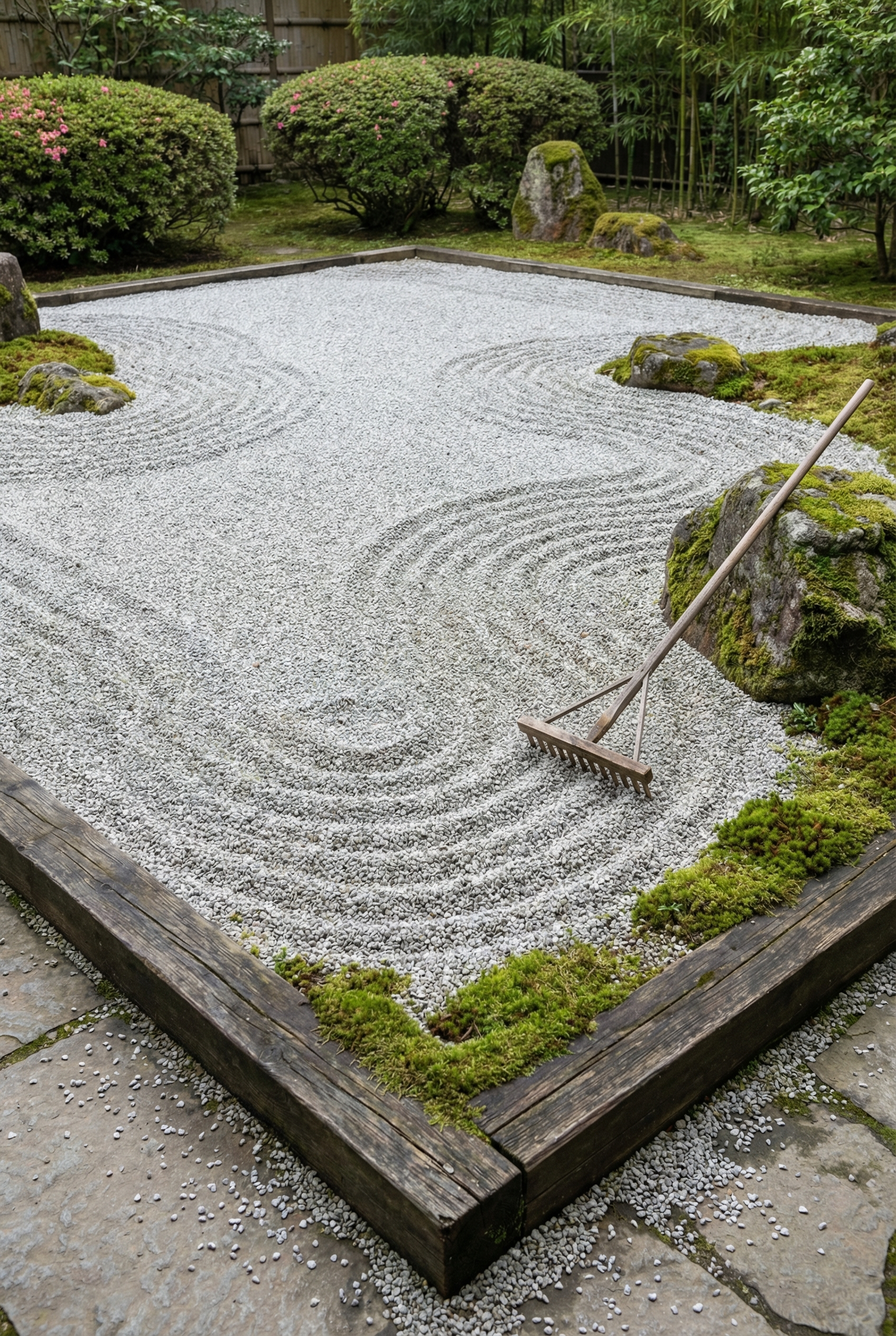
Gravel is a low-maintenance option for creating an outdoor Zen feeling, and a pond is not necessary. A small dry landscape area can create a calm setting, with raked gravel representing water and its lines giving the space a visual sense of breathing room. Level the gravel, edge the area cleanly, and choose one gravel type for a consistent surface. Install a weed barrier before adding the gravel, and plan on occasional raking because the area may be neglected for periods.
A wooden rake works well for raking gravel, and Japanese garden tools with simple designs and well-made construction are another option. A dog can disturb raked gravel, but that disruption can also illustrate the wabi-sabi idea of imperfection.
Lanterns, Pagodas, and Statues

Stone and other ornaments require restraint so they remain part of the garden rather than taking over the space.
A Japanese stone pagoda or pagoda temple statue gives the garden strong vertical emphasis, so place it where it can serve as a distant focal point rather than beside a patio chair. For a closer anchor, set a Japanese stone lantern near a turn in the path, or position it beside water.
Granite ornaments are permanent and develop patina over time, while resin ornaments cost less, weigh less, and can look plasticky up close. Material choice affects the appearance.
Heavy stone can be practical in windy areas and around children who use the yard for active play. Granite and resin each involve tradeoffs.
Statuary works best when meaning matters more than quantity. A jizo bodhisattva sculpture near the entry can have a protective effect.
A small garden resting buddha can appear as a discovered detail within the planting. At the threshold, a komainu garden statue marks the entrance, while a buddha garden sculpture placed by water or beneath a tree can bring a calming effect.
Aged Japanese antique statues and antique buddha outdoor statues bring gravitas through their aged appearance.
Symbolism in Ornamental Rock Placement

In the garden, ornamental rocks provide structure: a focal boulder creates visual gravity, and a strong rock grouping helps anchor the garden. Bury each rock’s base slightly to create a natural appearance; when the base is fully exposed, the rock can appear artificial. A vertical stone can suggest a mountain or strength, while a horizontal stone can suggest an island or earth, and gravel can represent water. Consider this landscape symbolism to support balance in the garden, but symbolism is not required.
At 7:38 a.m., choosing and placing a boulder at a landscape yard can make the yard feel intentional. With stone, gravel, or planting surfaces around them, place rocks and shrubs so they partially obscure one another. This hide-and-reveal approach limits what is visible at the same time and can make small spaces feel larger.
Minimalist Planting

Minimalist planting relies on repeated arrangements, a limited range of plant types, intentional shaping, and visible negative space, but it does not require empty space everywhere. Build the planting in sequence: start with structure, add softness, and then introduce seasonal interest. A handful of maintainable plant varieties is usually enough.
Evergreens provide the backbone of the planting. Japanese white pine and Japanese black pine can provide evergreen structure if the climate supports them, but climate-unsuitable plants should not be forced into the garden. Holly, yew, compact conifers, and certain varieties of juniper can provide year-round structure. The design depends on pruning, repetition, and form.
Moss can provide groundcover if it is thriving, while ferns can add groundcover or texture. Sedge and Hakone grass bring soft texture, and groundcover and soft-texture plants can create the feeling of a green carpet. Japanese maple brings fall color, while camellia, azalea, and spring cherry blossoms provide seasonal interest. Reserve about 30 percent of the planting for seasonal interest.
Pruning creates the surface treatment and is central to this style; the overall shape takes priority over volume.
Plant Selection by U.S. Region
In each location, regional conditions affect plant selection, including heat, humidity, wind, winter burn, and water access. Planning around those conditions can save time and money.
Northeast Region
Winter and wind affect the Northeast garden, where exposed evergreens may develop winter burn. Pines can work in the right conditions, but their success depends on shelter.
Moss needs shade and consistent moisture, so ferns and shade grasses are options when those conditions are insufficient. Northeast planting benefits from hardy evergreens and protected placement, while natural-looking mulch is preferable to dyed mulch. Japanese maple should be protected from harsh winds.
Midwest Region
Midwest planting calls for hardy species because the climate includes hot summers and severe winters. Hardy conifers, yews, and other resilient shrubs can provide structure, while Japanese maples may work in some areas when they receive protection from cold and wind.
Freeze-thaw cycles may move stones, so place stepping stones and edging with care. Minor adjustments to stone placement should be expected, while gravel areas are less demanding than delicate groundcovers. Keep an eye on drainage.
Southern Region
A long growing season matters when building evergreen structure in the South, but it can also increase overgrowth. Choose heat-tolerant plants for heat and humidity, and camellia and azalea can do well in the exact conditions they require.
Dark gravel can add to heat, while shade trees and layered planting can create cooler microclimates. Watering should be consistent, especially for moss, and seating and contemplation spots are better placed away from afternoon sun because excessive heat can build there. Stone can also retain heat.
West Coast Style
Along the West Coast, conditions can vary widely. Depending on the location, consider drought tolerance, wind, and salt air when choosing plants and materials.
Gravel, stone, and sculptural pruning all suit a West Coast garden. Choose plants with low established water needs to work with this setting.
In many coastal zones, a Japanese maple can work well in a mild climate. Grasses and groundcovers provide soft movement without requiring constant watering, while moss may be difficult to maintain without consistent moisture.
Bamboo Containment
Bamboo can suit the garden’s theme, but the type of bamboo matters. Whenever possible, choose clumping bamboo instead of running bamboo.
Root barriers, raised planters, and dedicated beds can contain running bamboo. Dedicated beds require root control, and running bamboo should not be left to grow without containment because it can take over the property and spread into a neighbor’s yard.
A bamboo screen or bamboo fence can bring the look of bamboo to a garden without underground spread. These options provide bamboo’s appearance while avoiding its spreading roots.
Garden Water Features
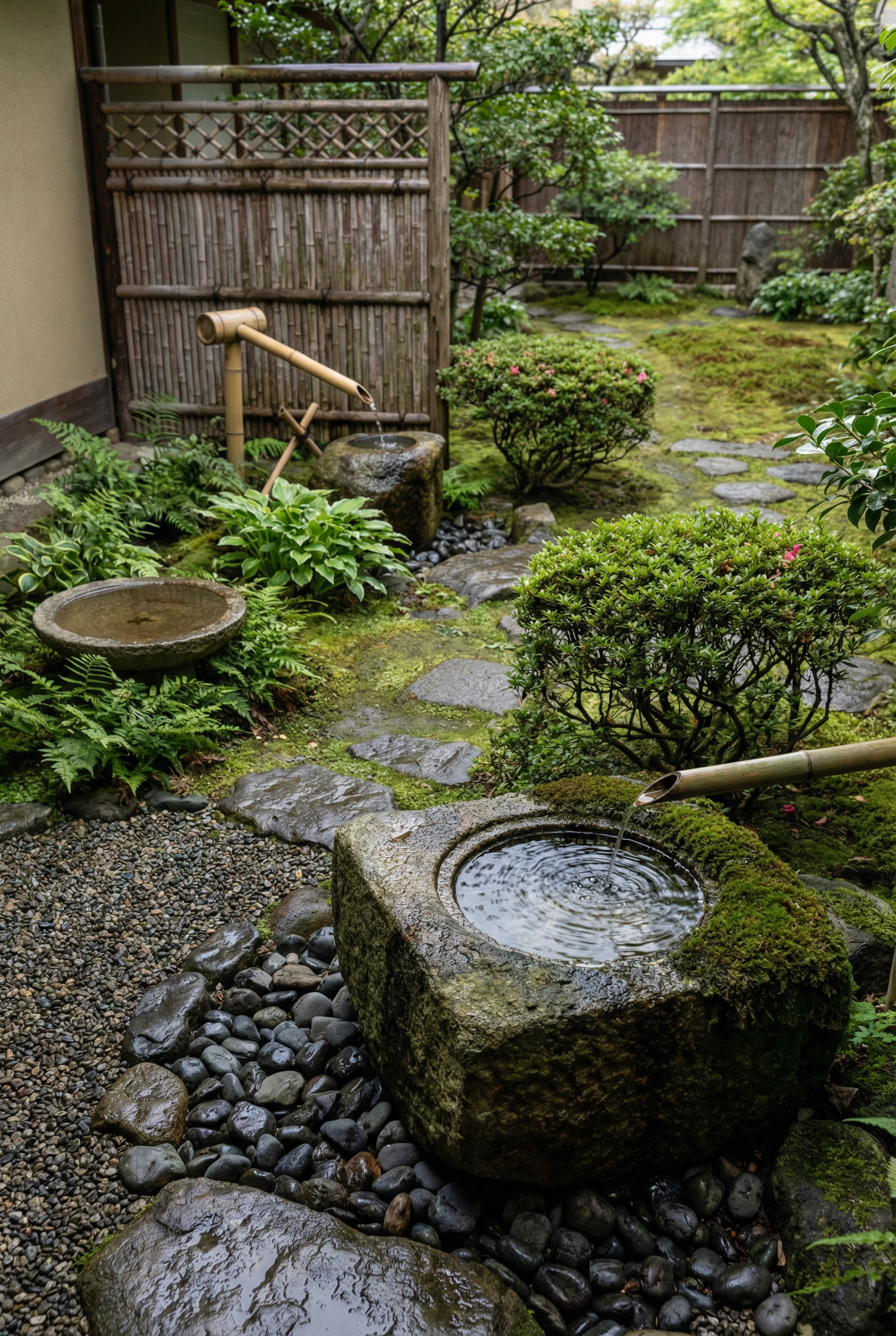
A water feature can change the mood of a yard immediately, and it does not have to be a pond. A small circulating basin can create a relaxed outdoor feeling.
With its simple, grounded character and origin in tea gardens, a Japanese tsukubai water basin serves as an entry option.
A substantial bowl planter or carved stone basin can give the water feature a weighty, grounded look. For a circulating basin, use a concealed reservoir with a pump, while the moving water provides sound.
A Japanese-style birdbath is a low-commitment feature that supports birds and adds movement. Low, simple forms integrate more easily and create a calmer mood than tall pedestal styles.
A bamboo spout or shishi-odoshi feature brings water into the garden setting, and bamboo products pair naturally with this element. Bamboo fencing can provide privacy while also creating a hide-and-reveal effect.
Texture and sound near a water feature can make the yard feel like an experience rather than a collection of objects.
For sound-sensitive users, consider a quieter pump. Water-feature pumps vary: some whine, while others produce a quiet hum, and a quieter pump usually costs more.
Japanese-Style Buildings

A complete teahouse is unnecessary; a smaller structure can still establish a Japanese-style threshold in the garden.
Natural wood can shape the entry with a threshold, small gate, screen, or natural-wood pergola. Any of these garden structures can change the entry experience.
Sukiya style draws on garden design, natural materials, refined rustic simplicity, non-shiny surfaces, and a quiet visual quality. Prioritize rhythm and pacing rather than assuming the garden needs a centerpiece structure.
Freestanding screens, heavy planters, and stone placement can create a garden structure without permanent holes. These no-drill options suit users avoiding drilling, which can be especially difficult in tile and concrete.
Japanese Garden Mistakes
Many Japanese garden attempts fail because they add too much. Too many ornaments compete for attention, straight paths can create rushing movement through the garden, and bright or dyed mulch and gravel can look unnatural in the ground plane. Too many plant varieties can make the planting feel scattered, so favor repetition instead; ignored pruning can leave the garden looking messy; too much symmetry can give it a stiff formality; and excessive lighting at night can make it look more like a parking lot. Running bamboo planted in the ground without containment can spread beyond its intended area, while water features placed where access is awkward can make maintenance difficult. Trying to finish everything at once can also lead to burnout. Edit and simplify the garden design, then create one focal moment and let the remaining elements support it.
Three Garden Layout Recipes
These layout recipes are not rigid plans. They serve as starting points and can reduce decision overload.
Small 10 by 20 Foot Yard

Preserve some open space, then run one clear path along the yard edge. Japanese stepping stones can border a small gravel area with clean edging, creating a simple zen garden and one calm destination.
A statue tucked slightly into the planting can feel discovered. Place one large Japanese water feature in the destination corner, shaped as a bowl planter or birdbath, and add either a resting Buddha or a Jizo Bodhisattva.
Stone choices and basin choices affect the approximate cost, which is about $600 to $1,500.
Yard of Medium Size
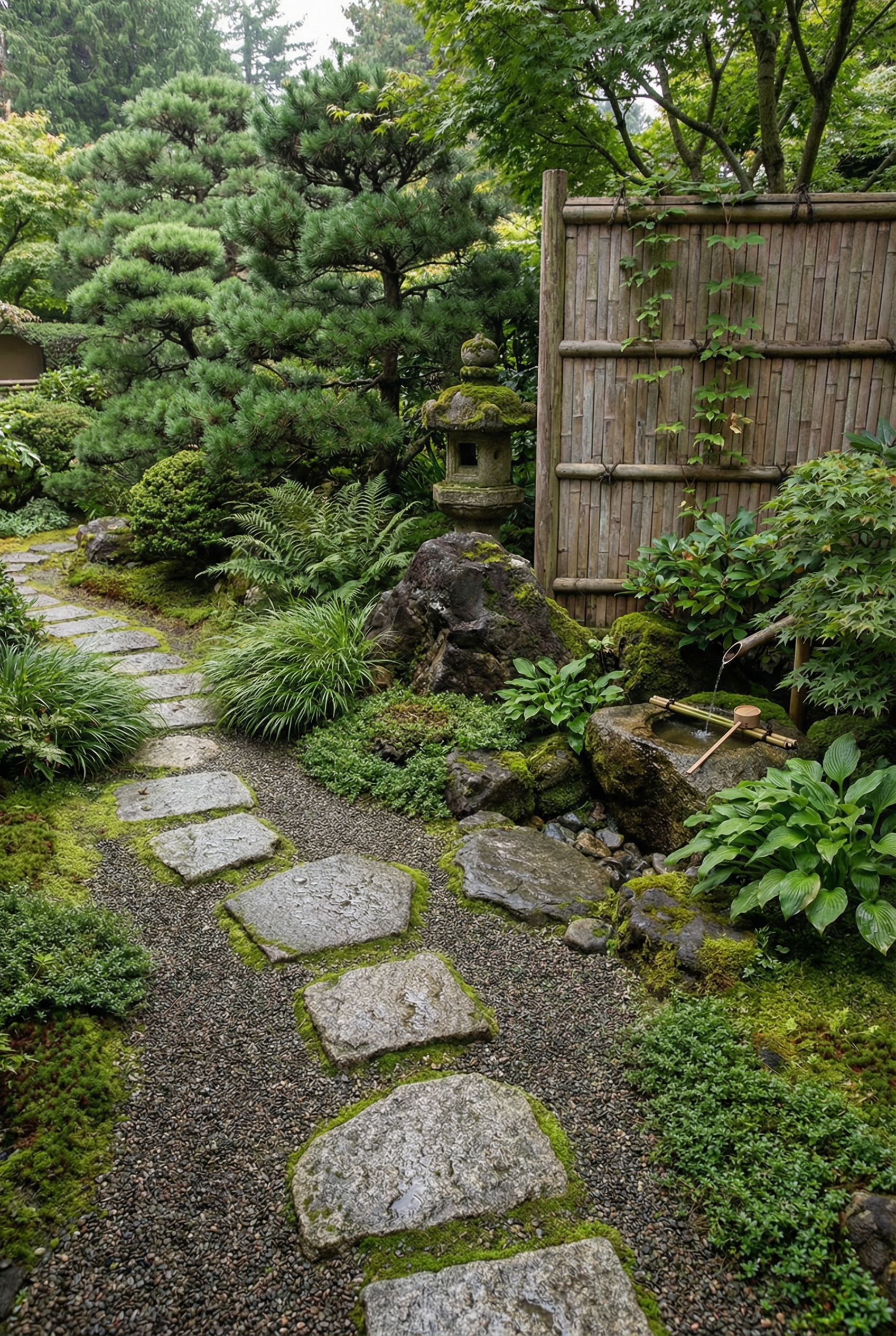
Use granite paving or stepping stones with gravel between them. Create a curved, meandering path with gentle changes in direction rather than sharp zigzags, then place a tsukubai basin near the turn so it is heard before it is seen. A quiet Japanese stone lantern can anchor the area near the water.
A bamboo screen can create a hide-and-reveal effect while covering an unwanted fence view. Use evergreen planting along the edges to give the space structure, with groundcover underneath for a softer finish.
This feature typically costs about $1,800 to $3,800, with the final amount influenced by stone choices and pump quality.
Yard of Large Size

Divide the yard into zones connected by paths and reveal moments. One walking zone can guide movement through the space, while a water zone can include a basin or pond if the desired maintenance is acceptable.
A contemplation zone can combine seating with a strong rock grouping, creating a place to sit near the rocks.
A Japanese stone pagoda or Japanese pagoda temple statue can sit well away from the patio and serve as a focal point seen from a distance. Planting around the view can frame borrowed scenery and add depth.
Hardscape and stone can make a large yard design more involved. The approximate cost is $4,000 and up, depending on the stone and hardscape.