

Floating shelves above a bed are typically placed 10 to 24 inches above the headboard, with the exact height adjusted for the ceiling, headboard, and desired look.
The right gap gives you enough room to keep your head safe while making sure the shelves feel intentional instead of awkwardly squeezed into place. Set the height thoughtfully, and the space above your bed can become a useful new area for storage and display.
Whether modern floating shelf looks are your thing or you simply need extra storage, shelf placement can change the entire feel of your bedroom. Before reaching for the drill, consider how high to hang the shelves over your bed so the arrangement feels balanced, fresh, and safe.
Why Hang Floating Shelves Above the Bed?
Bedroom Design Benefits
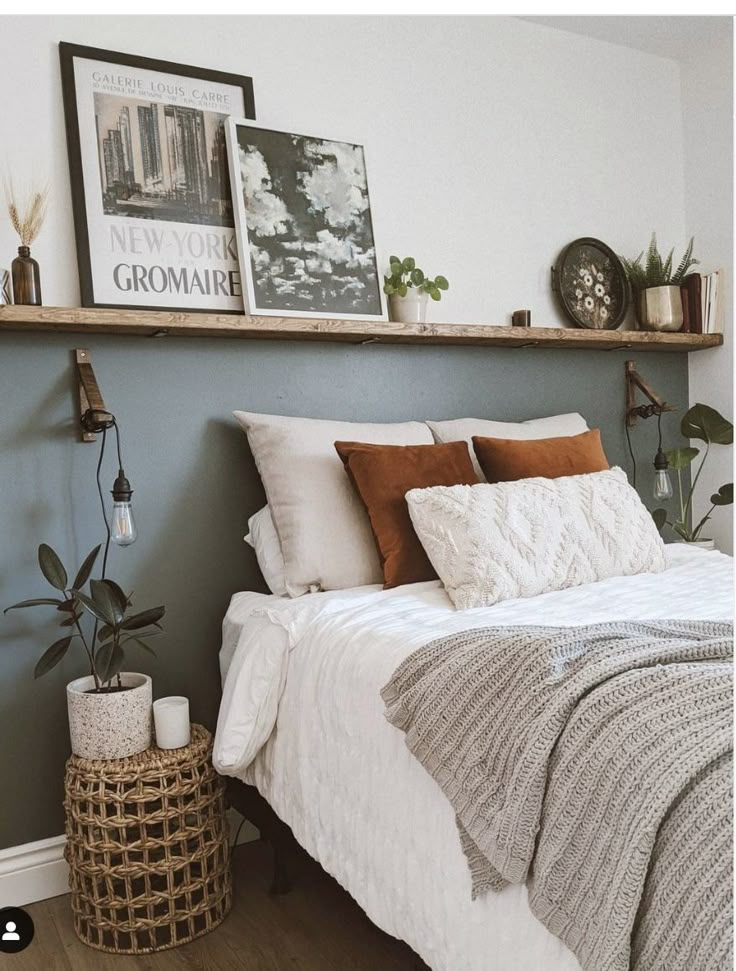
A floating shelf above the bed can give the room a finished look, fill the blank wall above the headboard without changing the rest of the room, and frame the bed. Placing it at the right height can also make the ceiling look higher.
The shelf should not be too high or too low. Low placement can cause head injuries, so leave enough room between the bed and the shelf.
Above Bed Storage Shelf
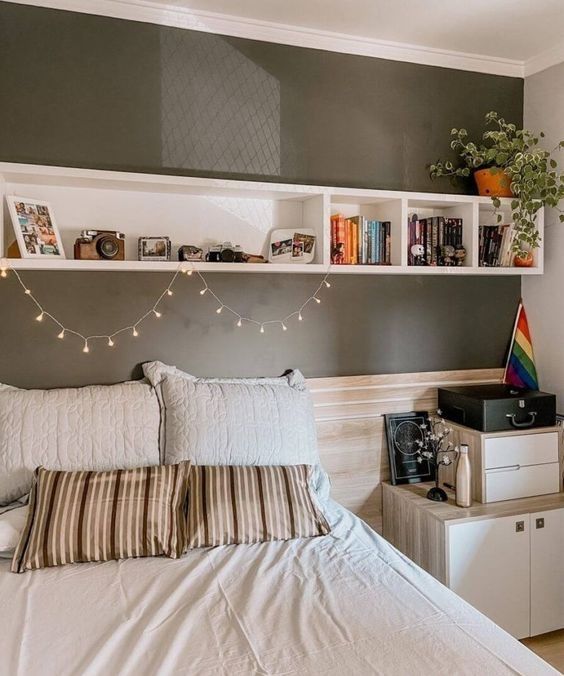
When nightstand space is limited, an above-bed shelf provides storage for books, candles, and small plants. Floating shelves around the bed keep extra furniture to a minimum, reducing the risk of tripping. Above-bed storage makes good use of space in small rooms by keeping useful items off the floor without taking up room beside the bed.
Keep the shelf 18 to 24inches above the headboard. That height makes it easy to reach while preserving comfort.
Shelf Styling Above the Bed
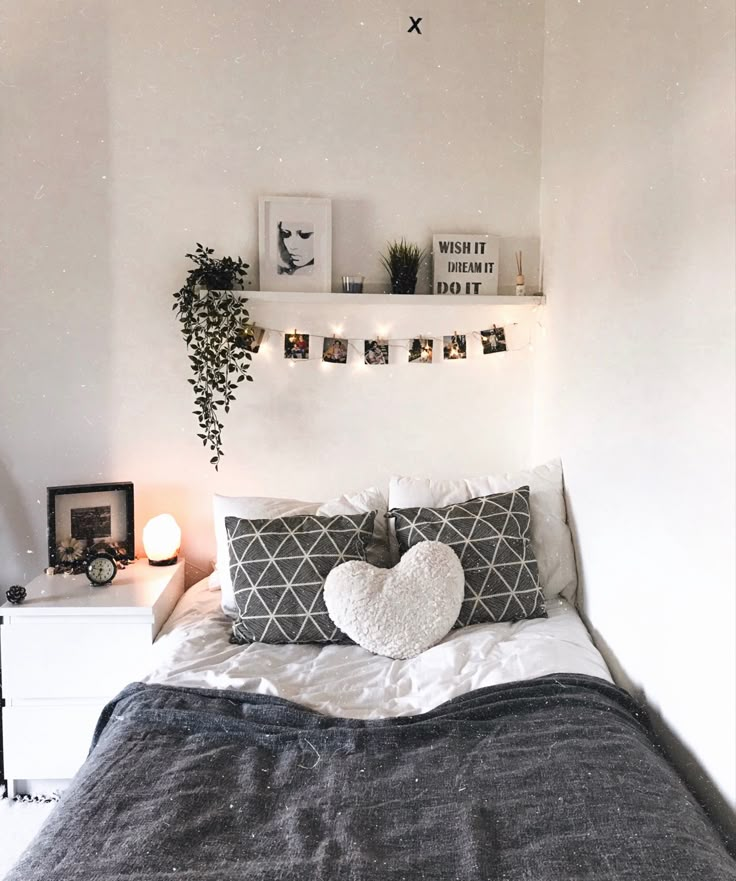
The way a shelf is styled can express personality. It gives the space a place for personal choices, whether the arrangement is simple or more varied.
On the shelf, combine an art print, a small sculpture, and a framed photo. Switch the shelf contents when the mood or season changes.
Shelf styling has no strict rules, so mix the shelf contents as needed.
The rest of the room can guide the shelf arrangement. Seek a collected look, but avoid making every shelf item match too closely.
Check the shelf placement for safety before adding anything. An unsafe shelf can cause items to land on the pillow.
Shelf Measurement Guidelines
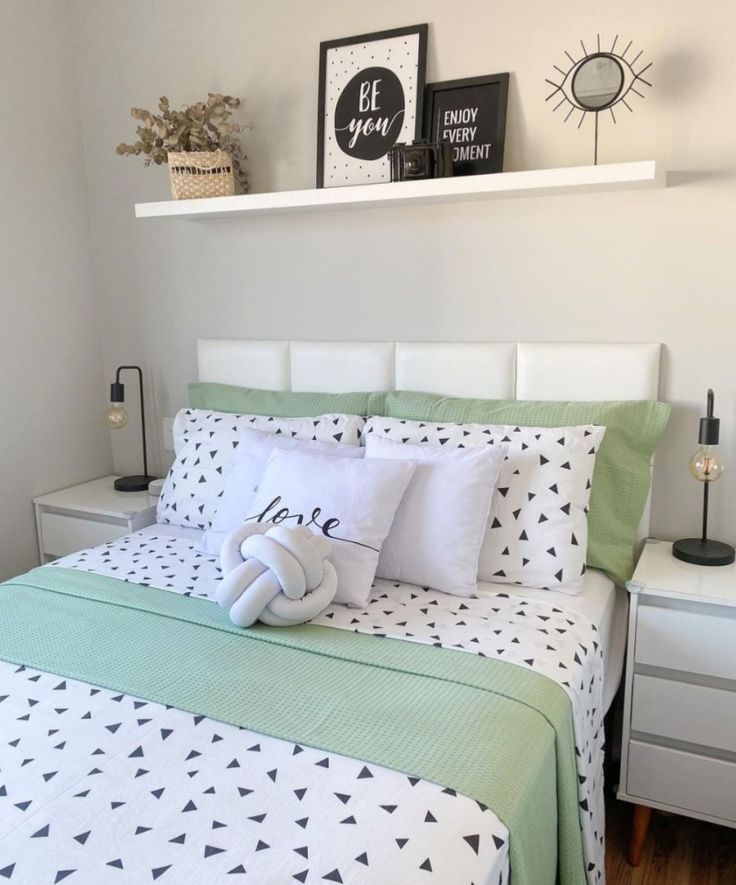
For a shelf above the bed, height should be measured in relation to the bed and its headboard.
The headboard provides a useful reference point for shelf placement. Designers recommend leaving 18 to 24 inches of clearance above it.
With no headboard or only a low one, set the shelf 36 to 48 inches above the mattress. This gives the shelf more room above the bed.
Consider the seated head position as another clearance point. Keep the bottom of the lowest shelf 22 to 24 inches above the highest point your head reaches when you sit up.
A 12-inch gap above the pillows may be uncomfortable, so leave more space when needed.
When using multiple shelves, leave 12 to 15 inches between them. That spacing gives each shelf room to function without crowding the others.
Painter’s tape can help you test the arrangement on the wall. Use it to mock up the shelf layout before drilling.
Shelf Placement by Ceiling Height and Bed Size
Ceiling height can change the shelf plan, especially when the bed is small. With high ceilings, taller stacks of bedroom wall decor can fill the vertical space, while floating shelves help organize the arrangement. With low ceilings, keep shelves closer to the bed and position them to avoid head contact.
A king or queen bed can use wider shelves. In a small room, narrow shelves can reduce a cramped feeling, and a single shelf is another option. For a twin bed, use a single short shelf or two compact shelves centered above the headboard.
Leave a foot of clearance above the headboard or pillow, positioning the shelf at least a foot above either one.
Shelf Clearance for Pillows and Headboards
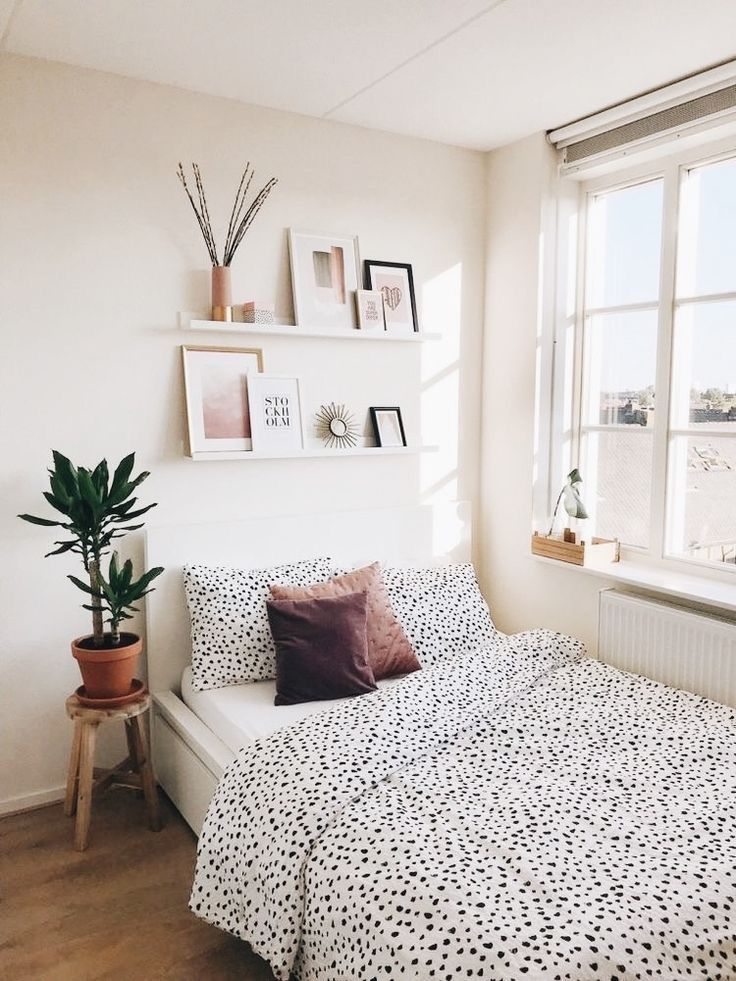
Shelf clearance should leave enough room to sit up in bed without hitting the shelf. As a usual recommendation, maintain 18 to 24 inches between the top of your pillows and the shelf. Tall pillows and chunky headboards may require a higher shelf because they take up more space above the mattress, while a thin headboard or no headboard leaves extra room.
Plants and books can decorate the shelf, but raise it if your styling needs more room so the decor does not feel crowded. Keep 2 safety concerns in mind: leave 18 to 24 inches between the top of your pillows and the shelf, and raise the shelf further for tall pillows, a chunky headboard, or decor.
Shelf Visual Weight
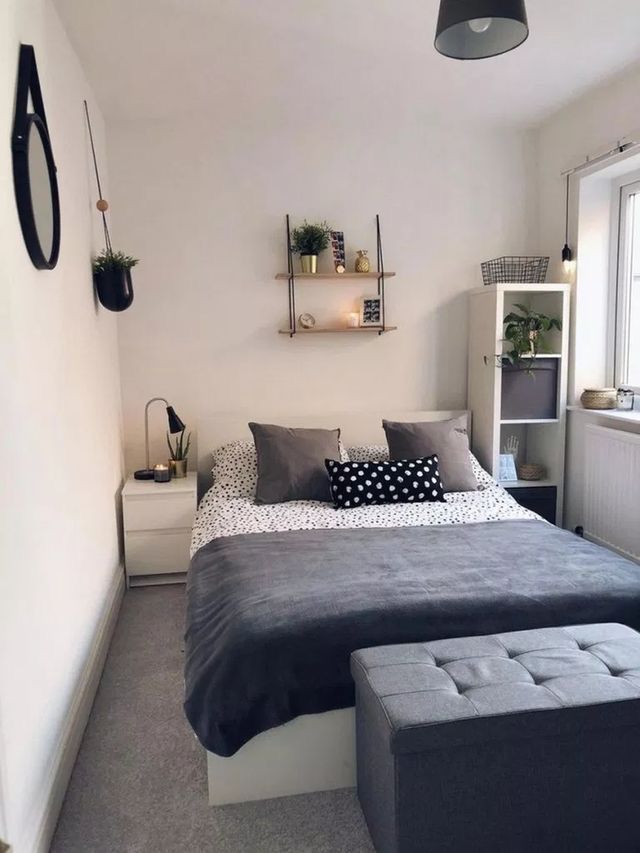
Shelf placement depends on the balance of the overall arrangement rather than on one fixed rule.
Above the bed, avoid placing the shelf too low or too high. A low shelf can interfere with headroom, while a high shelf can feel disconnected from the bed and be harder to use.
For visual balance, some arrangements use 8 to 12 inches of space above the headboard, but increase the clearance when needed for safe headroom.
An 8- to 12-inch gap can create a compact visual arrangement, but consider the access needed to reach and dust the shelf before choosing that spacing.
A short shelf can disappear above a large bed, while a long shelf can look clunky above a small bed.
Multiple shelves should have at least 15 inches of space between them, which provides comfortable breathing room.
Symmetrical and Asymmetrical Shelf Arrangements
For a symmetrical look, position the shelves at equal distances from the bed. Matching their placement keeps the arrangement balanced, creates a neat appearance above the bed, and gives it a classic style.
For an asymmetrical arrangement, vary the sizes and heights of the shelves to support a relaxed, modern style. Above the bed, a gallery wall can combine shelves with art, with one side holding a large shelf and the opposite side holding two small shelves. The choice between these arrangements is subjective, with no right or wrong standard.
Gallery Wall Above the Bed
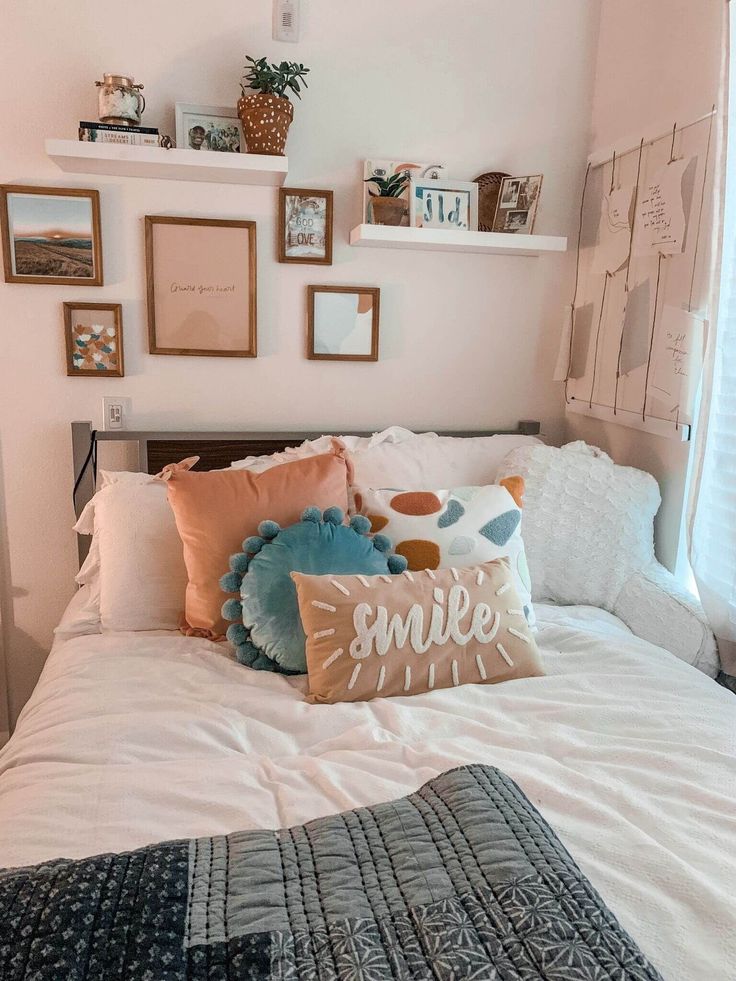
Create a gallery wall above the bed with shelves supporting multiple plants, art, photos, and small objects. Include one or two mini plants, using the shelves and wall space together to change the room’s atmosphere.
For a compact arrangement, place the main shelf about 8 to 12inches above the headboard, increasing the gap when more headroom is needed. Arrange small shelves, frames, and wall hooks in loose rows and columns, while varied spacing, overlap, and odd gaps give each piece room and create a lived-in display.
Modern and Classic Shelf Styles
Modern shelves use clean lines, lighter woods, and neutral colors. White minimalist shelves paired with black metal brackets keep the arrangement simple, while letting bedroom decor remain visible without creating visual overstatement.
Chunky shelves made from natural wood convey warmth and give classic shelf designs a substantial, cozy vintage style. They suit both farmhouse and traditional rooms and support displays of photos and keepsakes.
Bedroom Shelf Colors
Wall decor can help connect floating shelves above the bed to the room’s color scheme. Coordinate the shelf color with the other colors in the room.
When the room palette is white or neutral, match the shelf color to it. Matching shelves support an open, cohesive appearance and suit small spaces.
Dark shelves contrast with pale walls, but keep the shelves from overpowering the room.
The shelf color can echo the colors in the bedding or artwork. This creates a connection between the shelf and the rest of the room.
A shelf shade that differs slightly from the wall color provides visual distinction. Keep the difference subtle so the shelf does not look random.
Proper Shelf Mounting
Use suitable hardware and mount the shelf securely so it remains stable and level. Floating shelves and their mounting brackets each have weight limits, so check those limits before installing or loading the shelf. On drywall, choose anchors that properly support the shelf and prevent it from tilting or shifting out of level. Above the bed, use mounting hardware suited to both the wall type and the shelf’s expected load, regardless of the shelf’s height.
Mounting into wall studs provides strong support. When studs are not available, use toggle bolts or heavy-duty wall anchors suited to the wall type. Follow the weight capacity listed on the hardware kit when deciding what the shelf can hold. For thick or plaster walls, use heavy-duty hardware and consider better brackets, since these walls may need more substantial support than standard mounting hardware provides.
Studs or Wall Anchors
A low-cost stud finder can help locate solid mounting points before you attach a shelf. Mounting a wall shelf into studs provides the strongest hold and allows it to support storage and chunky decor above the bed.
If the studs are not in a suitable location, choose wall anchors made for the type of wall where they will be installed. Avoid relying on cheap plastic anchors for shelf support; heavy-duty metal anchors are a safer option for a shelf above the bed when studs are unavailable. Basic anchors may be sufficient for a few small, light items, since a lightly loaded shelf does not require the same support as a heavier display.
Before drilling, check what is behind the wall so you understand the area before making holes for the shelf.
Corner Shelving
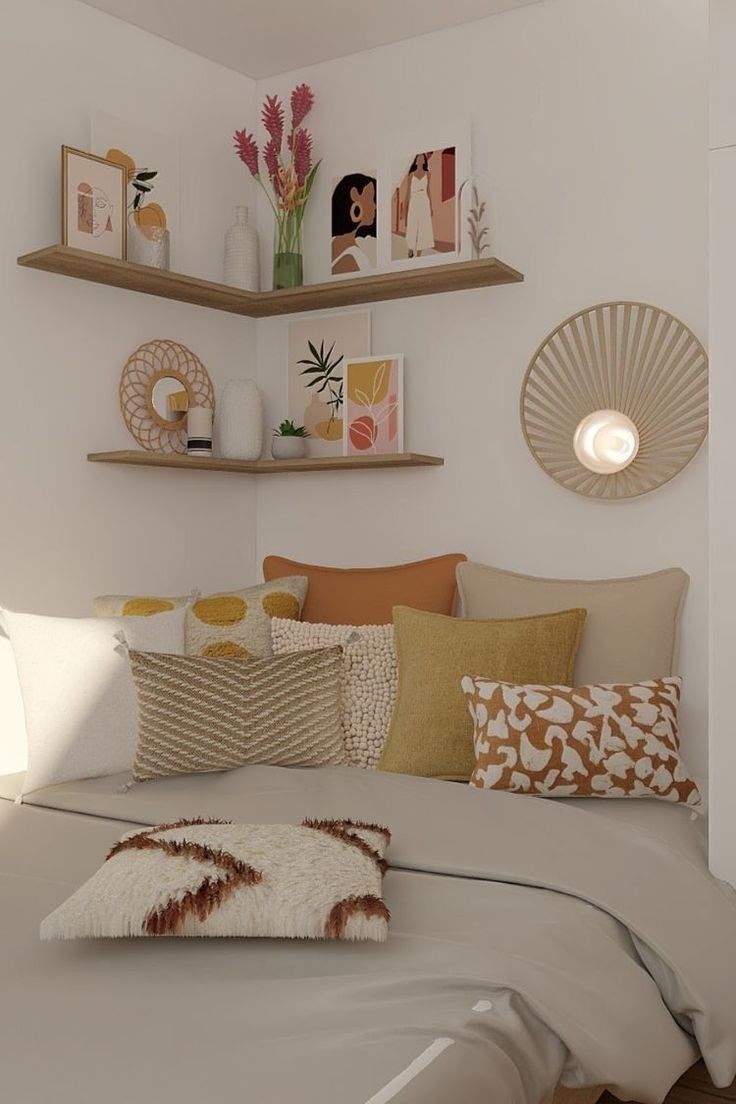
In a small bedroom, use awkward corners for shelving. A corner can hold a shelf without taking up the same open wall area.
An underused corner can store books, display plants, or hold keys and glasses without occupying the main wall area.
The shelf angle should match the line of the bed or the dresser. Aligning those lines keeps the shelves oriented with the furniture nearby.
Shelves near the headboard should be measured carefully for height. Keep the shelf above the bed with enough space for safe clearance.
If the shelf does not have enough clearance, moving in bed can cause your head to hit it. Leave sufficient space between the bed and shelf to prevent contact.