

Playroom activity zones can be organized for reading, crafts, and building. Rugs, activity-based storage, and easier cleanup can help define each area while keeping the room practical and informal.
If you are planning decorating ideas for playroom activity zones, start by imagining a reading nook that stays a reading nook for more than five minutes. Then picture an entire wave of blocks rolling into it by 4:12pm. The answer is not always adding more storage, but giving each activity a clear place to land.
The room can feel calmer when it has a few invisible boundaries. A rug can help define one area, while storage placed near the activity it serves keeps the space easier to use. That approach still leaves room for bright colors, everyday messes, and the occasional marker cap making an unfortunate appearance.
One cheerful example features a sticker-covered room with a long, low storage run, a kids desk, and a small climber and slide setup. The arrangement gives everything a home while keeping the overall mood playful and whimsical. It comes from Abbey Webber-Sloanand, and the whole space feels cute while still clearly suited to real children.
Another strong setup treats the playroom more like part of the living room. A rug and a line of low storage create separate zones without making the space feel divided into little compartments. The layout from Chelsea shows how kid stuff can stay practical, visible, and breathable in a shared room.
Rugs
A craft rug that can handle spills is useful in a playroom. Use separate rugs to mark the books area and the blocks area, then give crafts their own spill-tolerant spot.
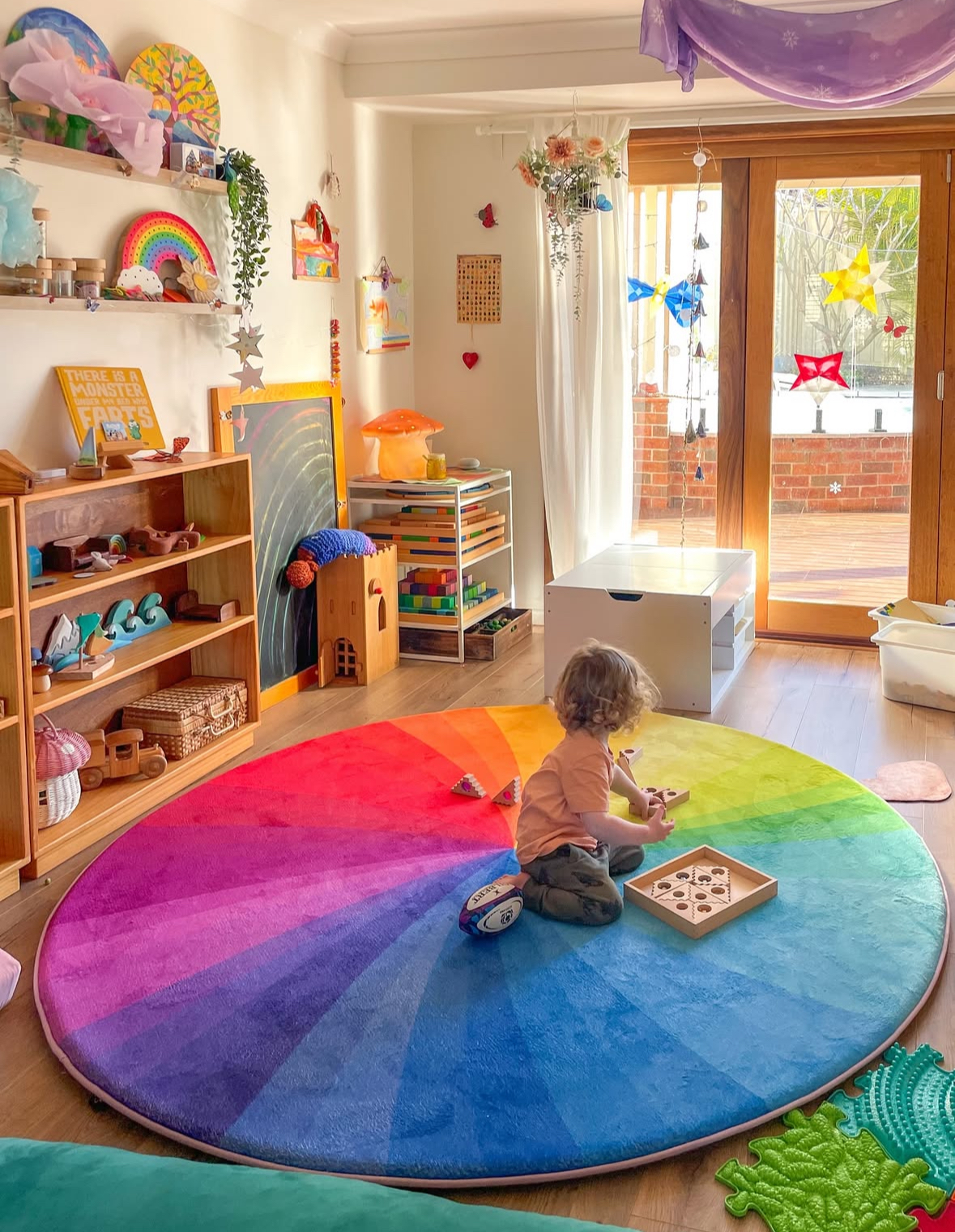
In the open floor, a saturated round rainbow rug anchors a creative playroom and clearly defines the play boundary.
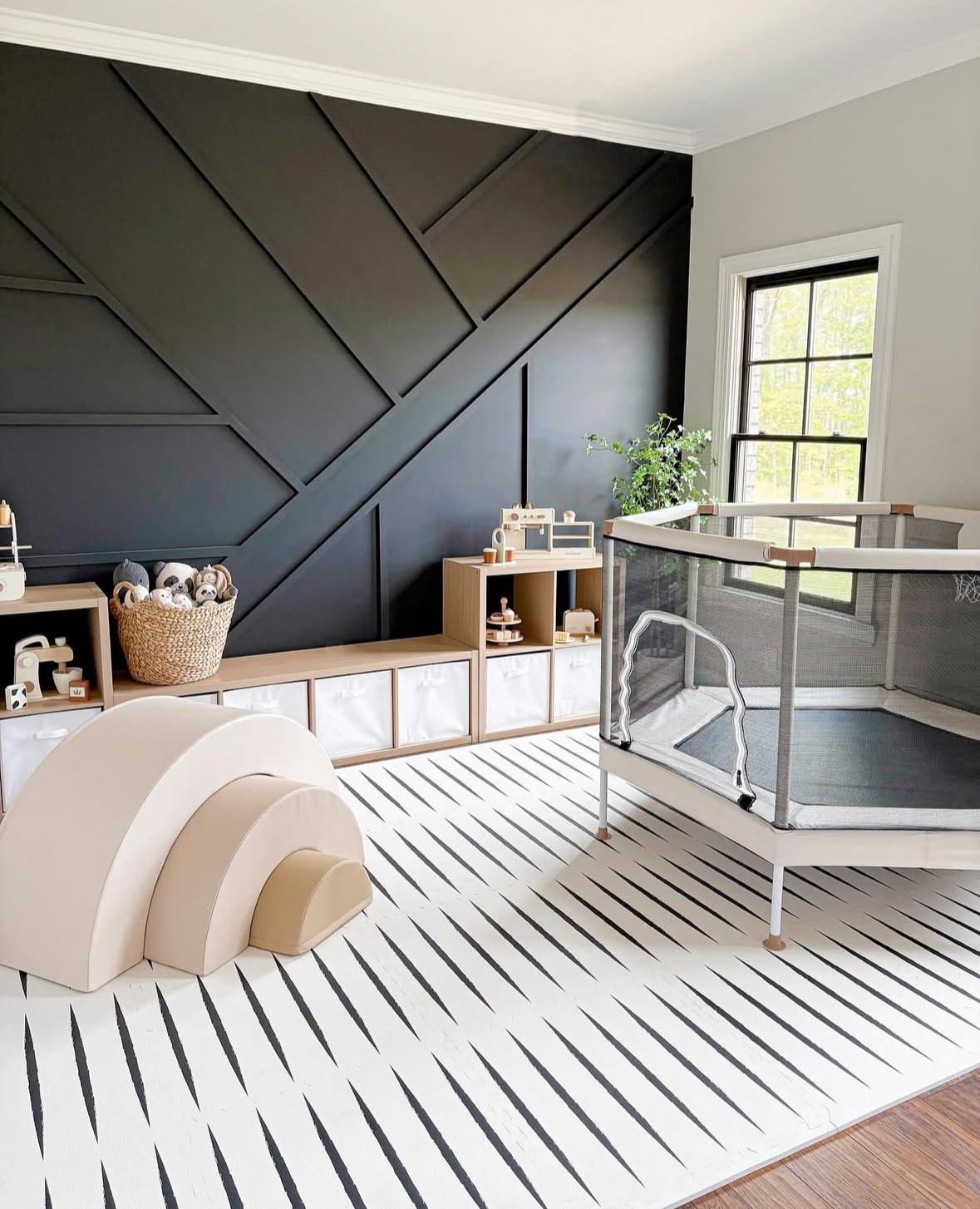
A building activity can sit on a high-contrast black-and-white graphic play mat, while the modern playroom uses black walls and a neutral base to reduce visual noise. The setup supports both activity zoning and gross-motor play.

A wavy rug with a scalloped edge can be the focal point of the zone, supporting both a reading area and a pretend-play area. Keep the surroundings simple, even in a whimsical playroom with bunting and star decals.
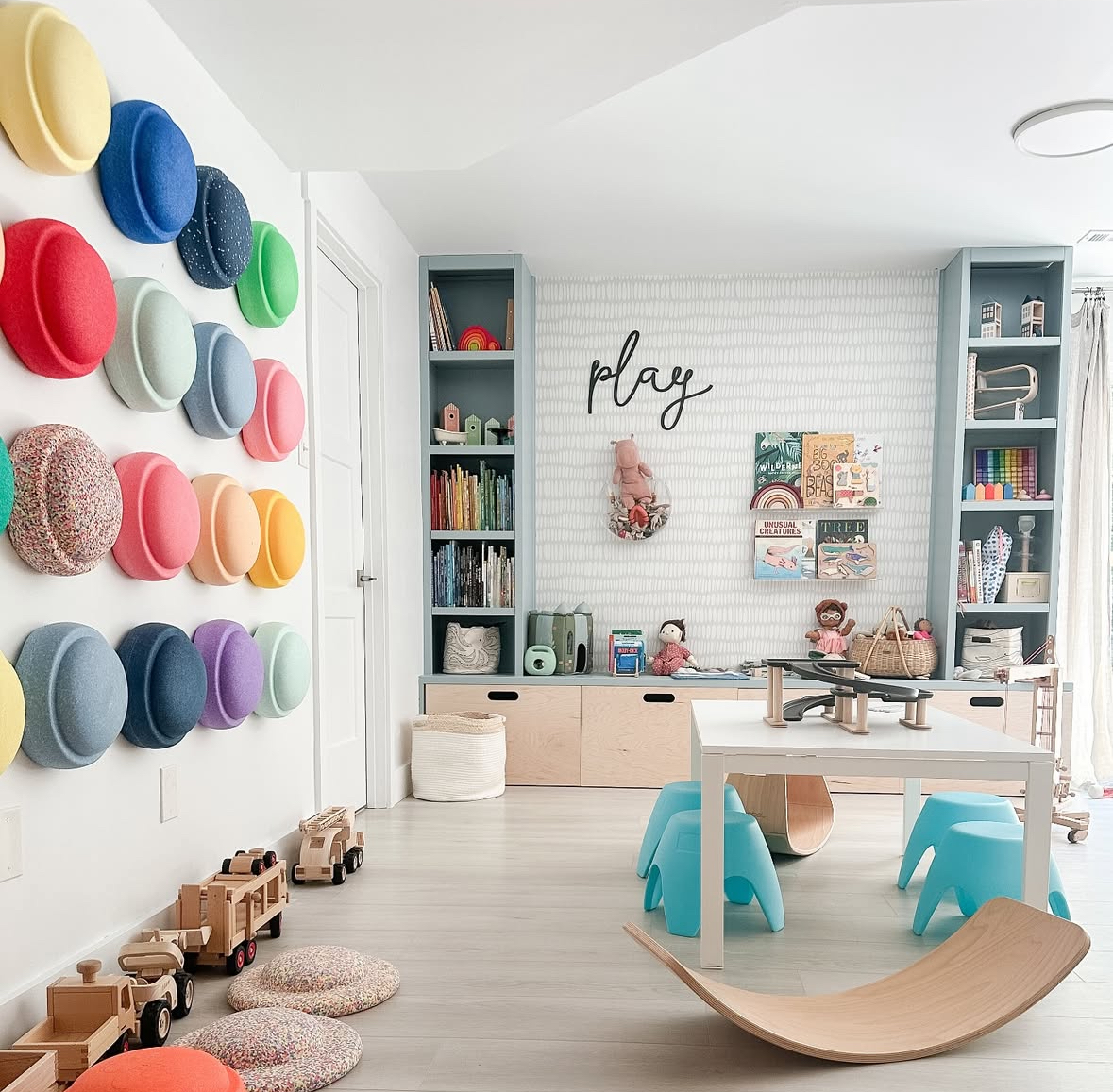
A hat wall marks the open-play side of the playroom, while the empty floor works as a design choice as well as room for movement. Leave enough floor space for large building projects, and place a balance board in the floor zone.
Storage
Rotation is one useful storage category, alongside reading, craft, blocks and building, and pretend play. Store playroom items by activity rather than by item category so each type of play has a clear home.
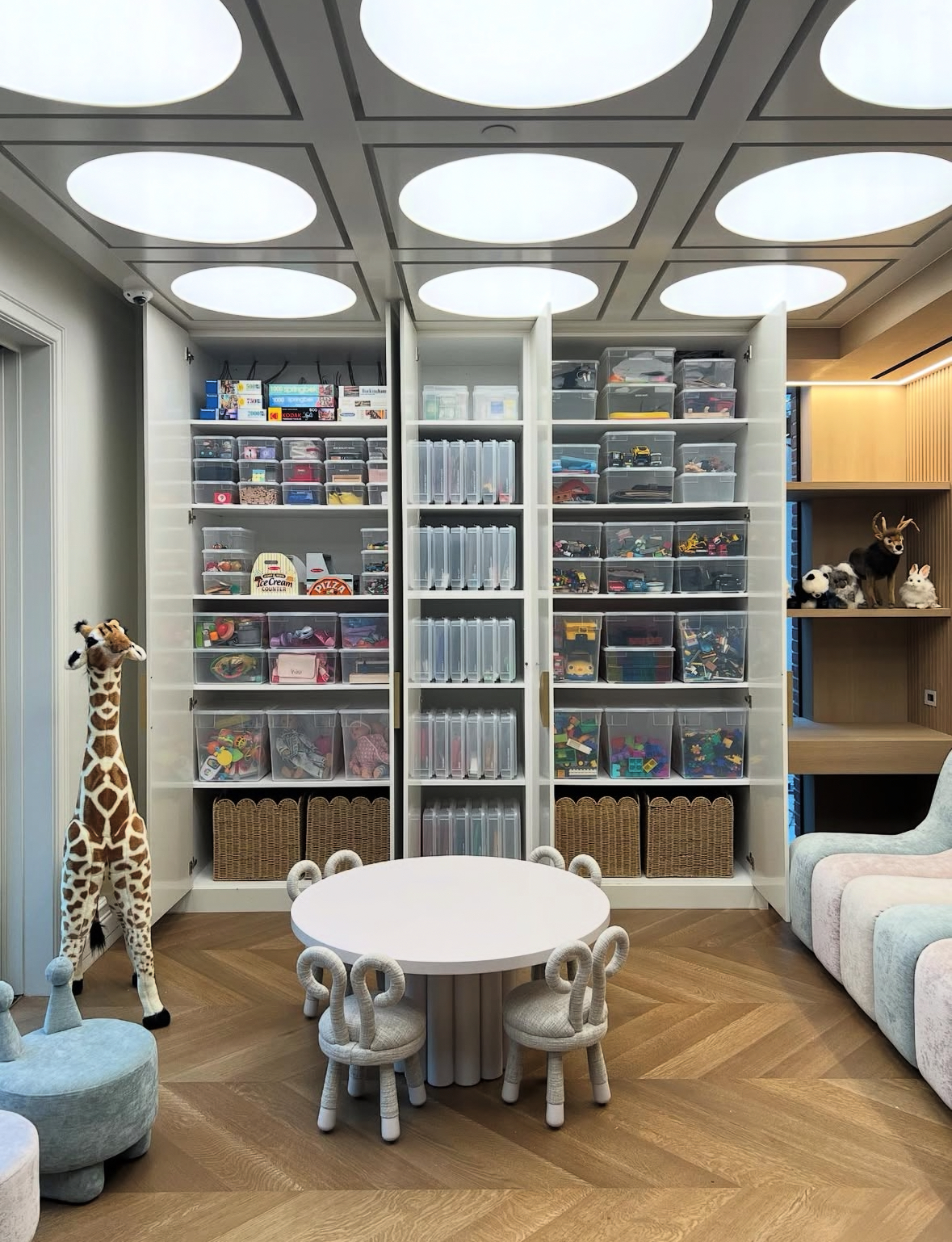
A wall-to-wall closet with a systematic layout can use clear, uniform bins so children can see and reach their items. Keeping the bins consistent also reduces visual complexity.

A painted IKEA Billy bookcase can give storage a built-in appearance while keeping items visible and adding decor. The paint color helps the bookcase look intentional, but avoid overloading the shelves; it remains a budget-friendly option.
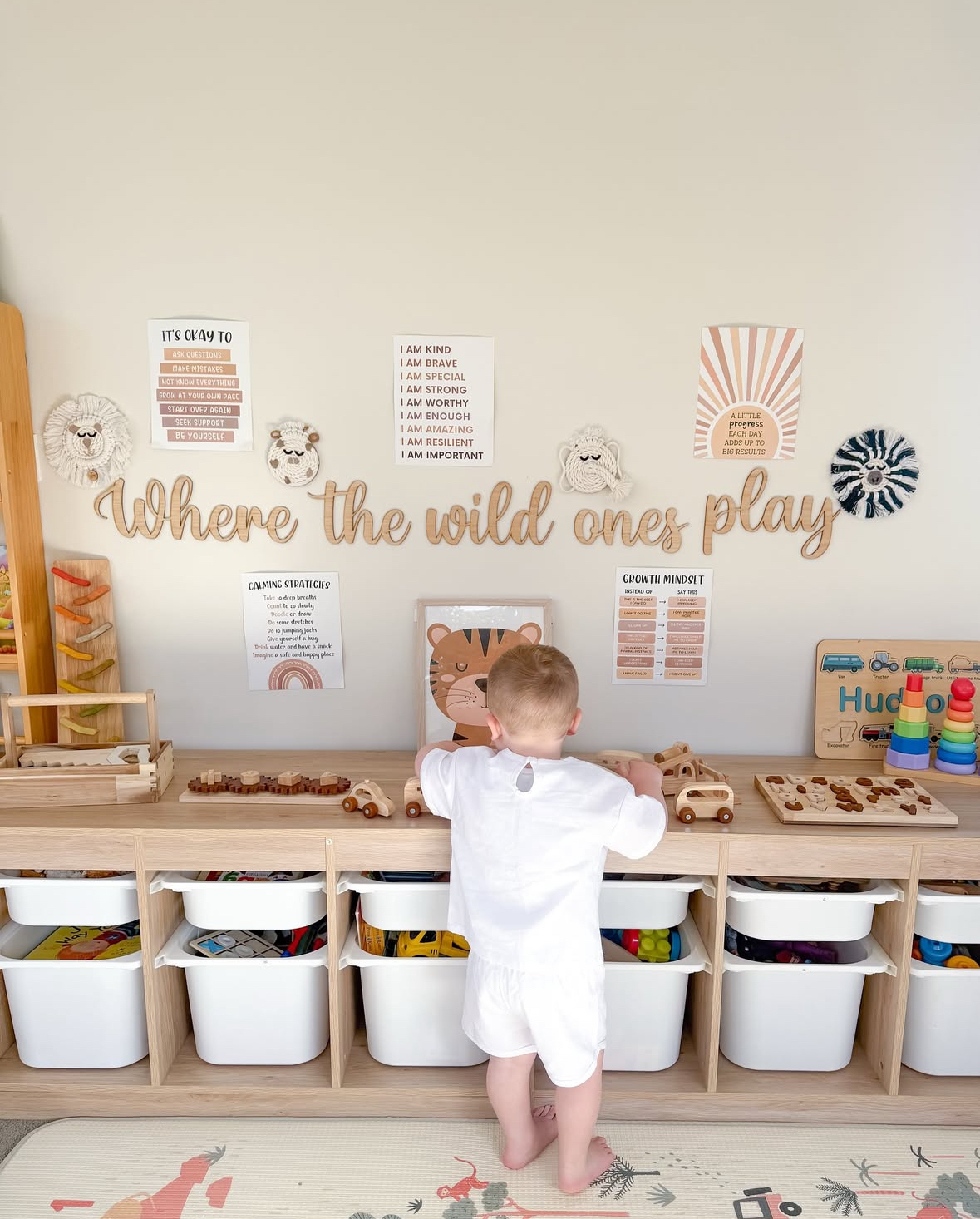
Under the long, low countertop, cubbies keep clutter out of sight and support toddler access. The countertop creates a landing zone for toy rotation and daily activity setup, alongside the wall message “Where the wild ones play.”


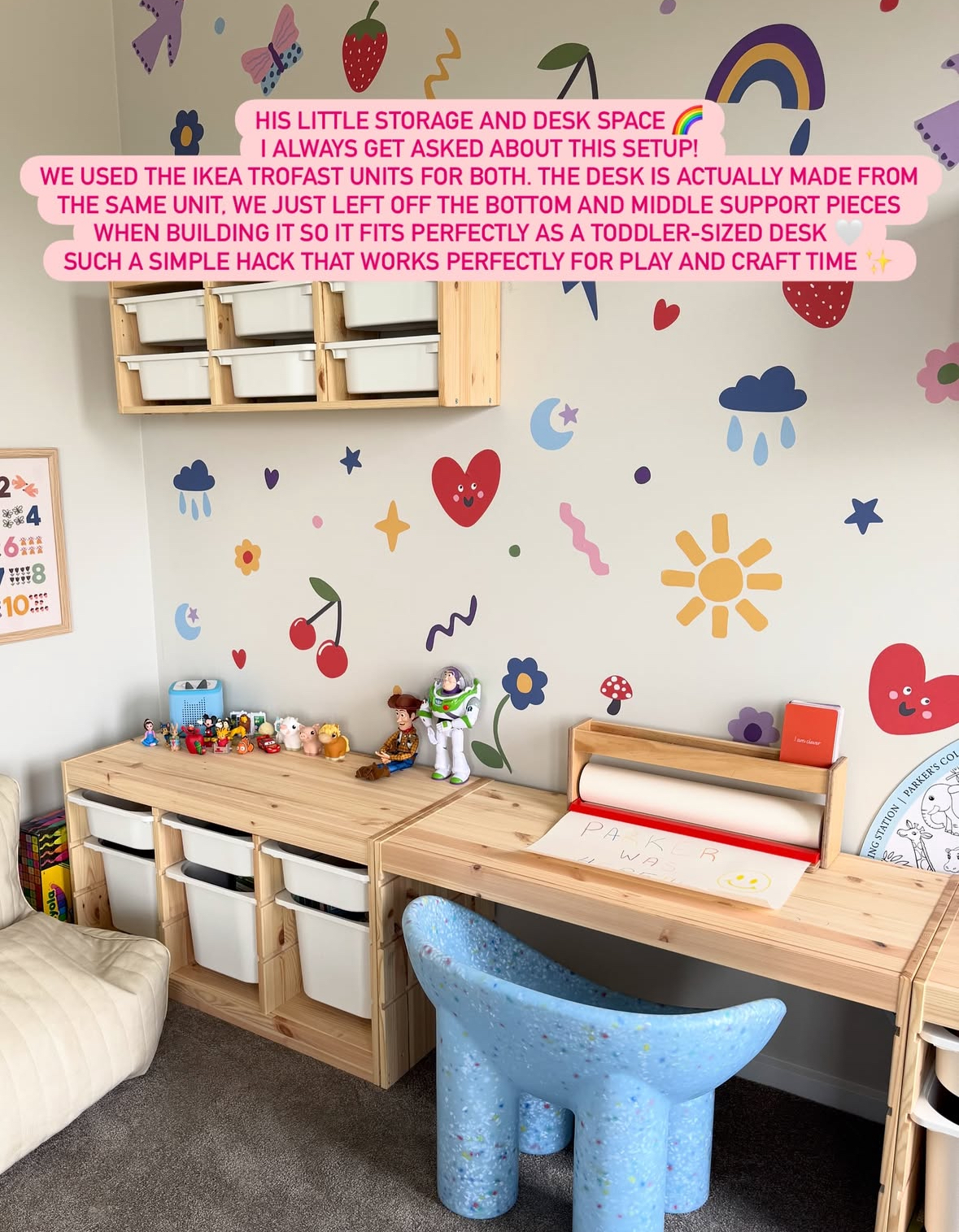
A reading book corner with forward-facing books and a nearby chair can support a reading routine and make reading the default activity. Soft lighting adds to the reading-nook feeling.
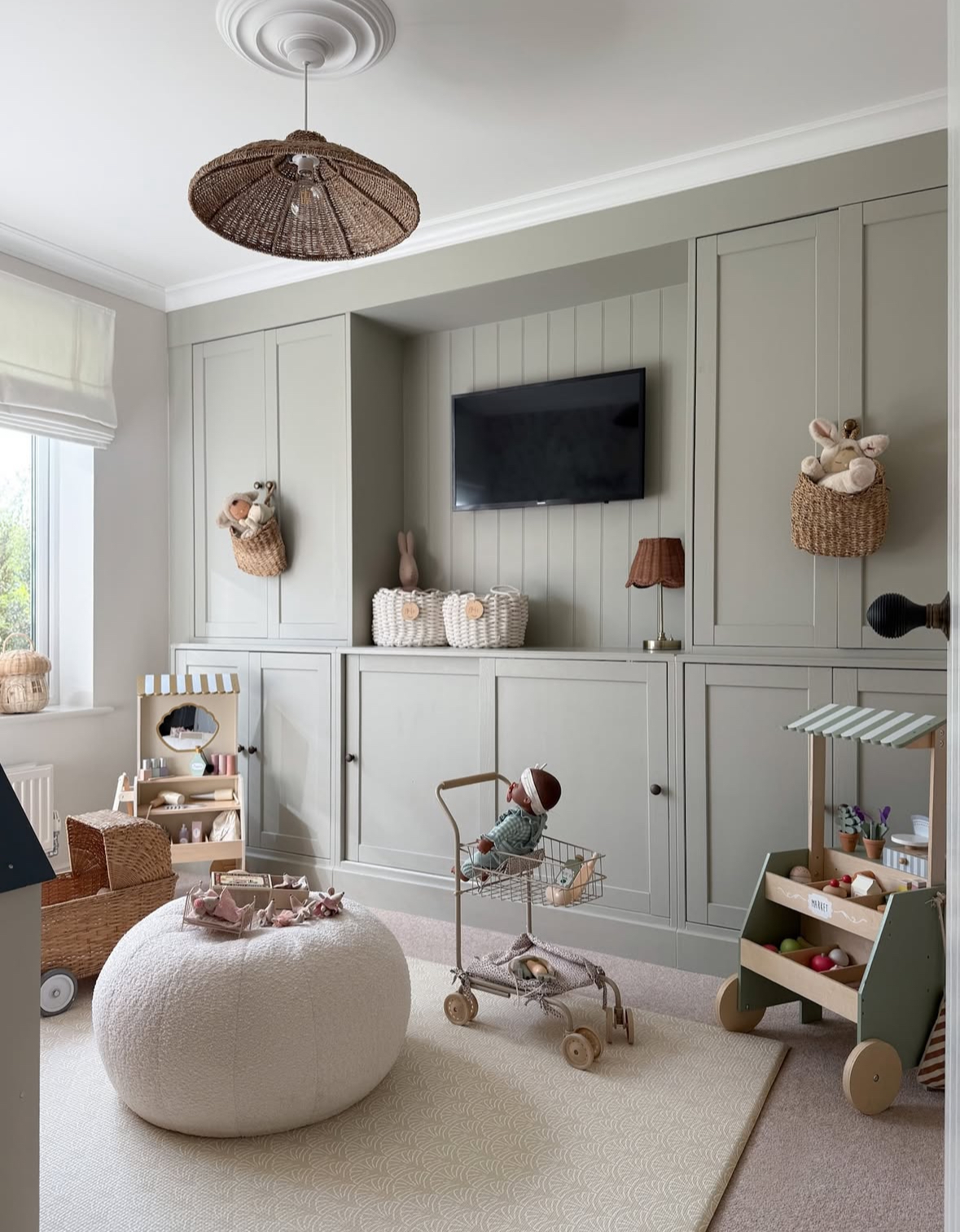
A sage built-in wall that includes the TV can combine open shelves with closed cabinetry. The open shelves provide display storage, while the closed cabinetry hides clutter and helps the room keep a room-like appearance.
Cleanup
Blocks left beside the reading chair show how quickly one zone can affect another. Cleanup becomes harder when zones collapse, and a difficult reset follows when items from one area spread into the next.
A deep bin labeled blocks handles the building zone, while a tray and a drawer labeled current supplies serve the craft zone. Use one broad catch-all rather than many narrow categories, store remaining craft supplies higher, and provide a catch-all for each activity zone.

The foam blocks in an indoor playroom foam pit are made from the same foam material as the pit itself. The setup contains the blocks and supports gross-motor play, although a foam pit is an aspirational arrangement. The containment principle can be adapted.
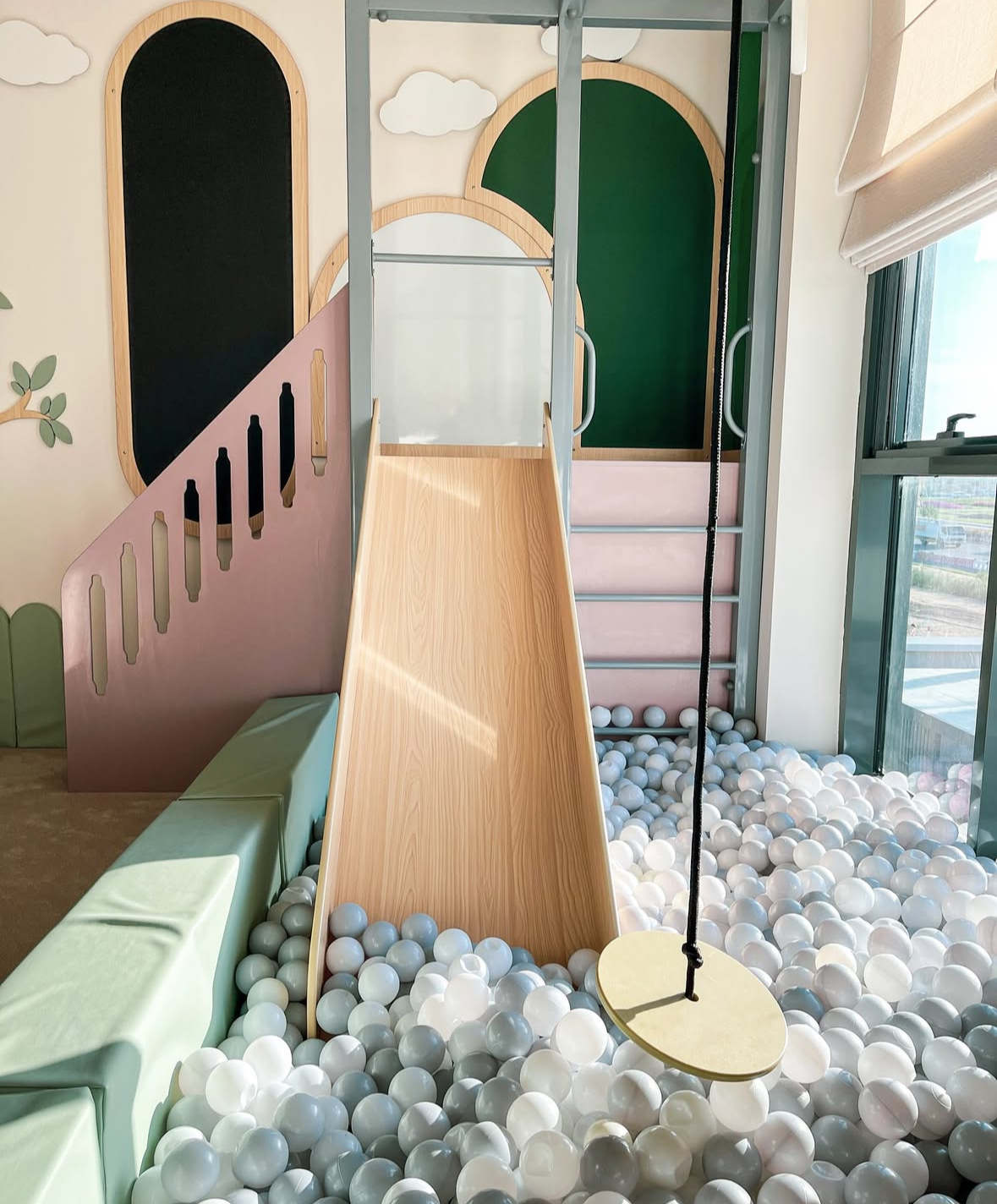
A ball pit paired with a slide creates an indoor-play activity zone for the balls. Its containment supports cleanup, and a soft perimeter supports safety. This setup is attributed to @ralee.me.
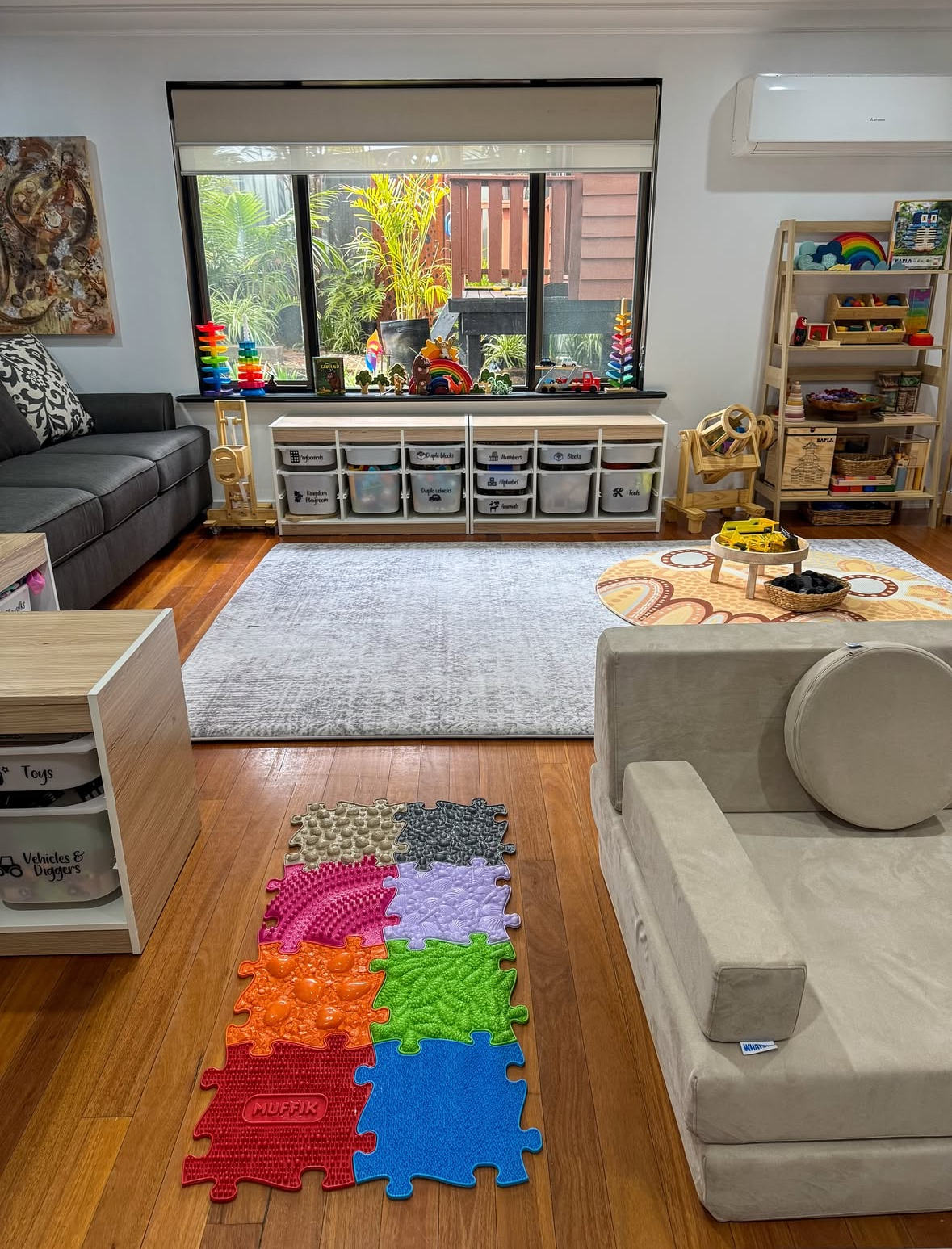
In a shared living-room playroom, keep the blocks close to the open area, with books by the seat and craft supplies by the table. Place the largest storage near the biggest mess, since keeping storage close at hand supports more efficient cleanup.
Reading Zone
Excess items can turn a reading zone into a dumping ground, so keep the setup focused. Give it a soft landing with a rug or cushion, add a book display for grab-and-go access, and include a seat.

A nearby comfortable chair and forward-facing shelves make this book corner work for reading while combining style with maintainability. The close-up is attributed to Abbey.
One shelf and one basket are enough to keep book storage compact in a reading corner. Star stickers and bunting support the reading atmosphere, and the wall design is attributed to @kidofthevillage.
Craft Zone
A container labeled current project gives unfinished work a place to stay, helping prevent craft supplies from migrating to the sofa. Store craft supplies in the craft zone, use wipe-clean craft surfaces, and make the kids art space easy to start and easy to stop.
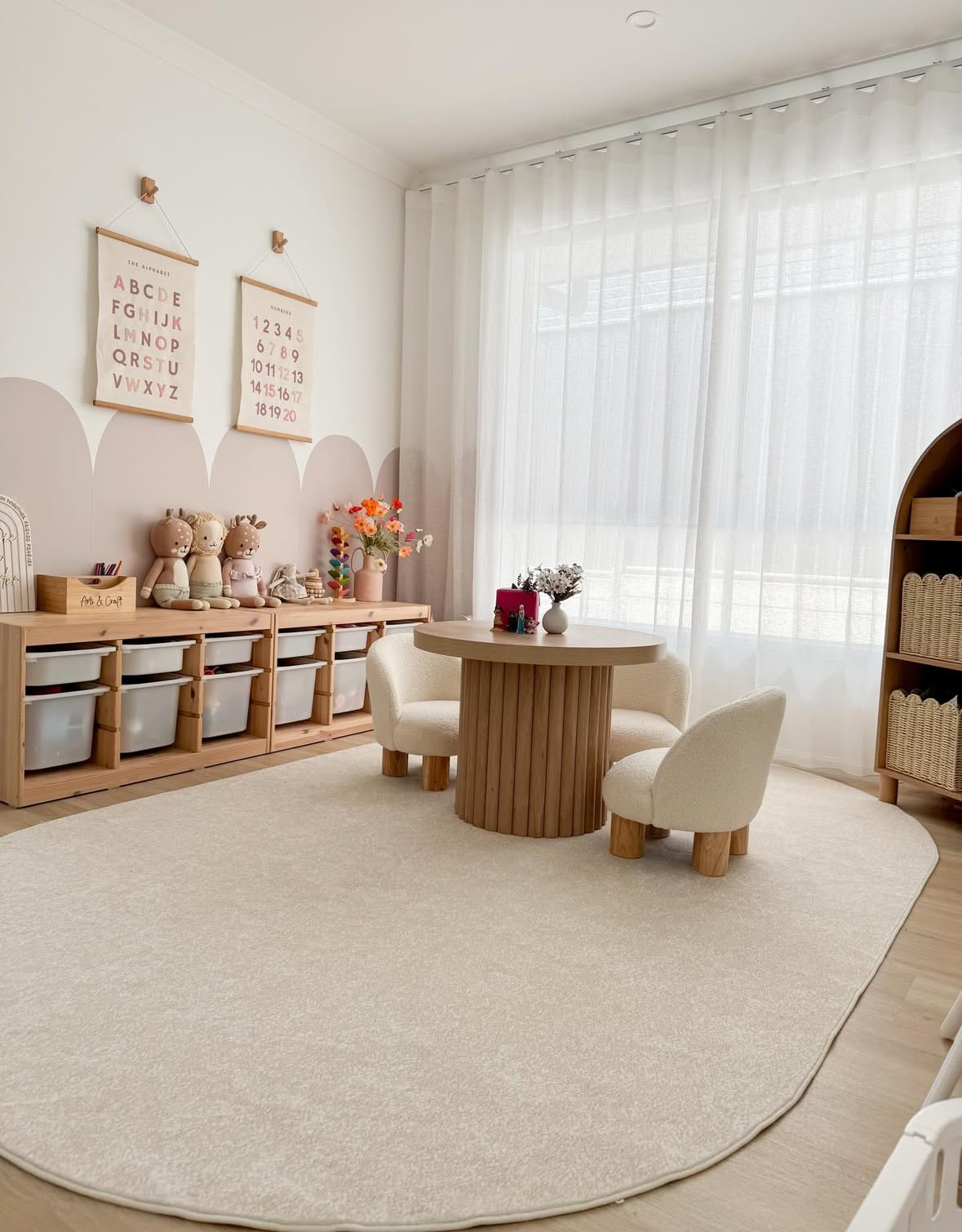
A craft zone with a table, chairs, and a soft oval rug functions as a child-scale workstation for crafts and puzzles. The rug also defines the activity zone.
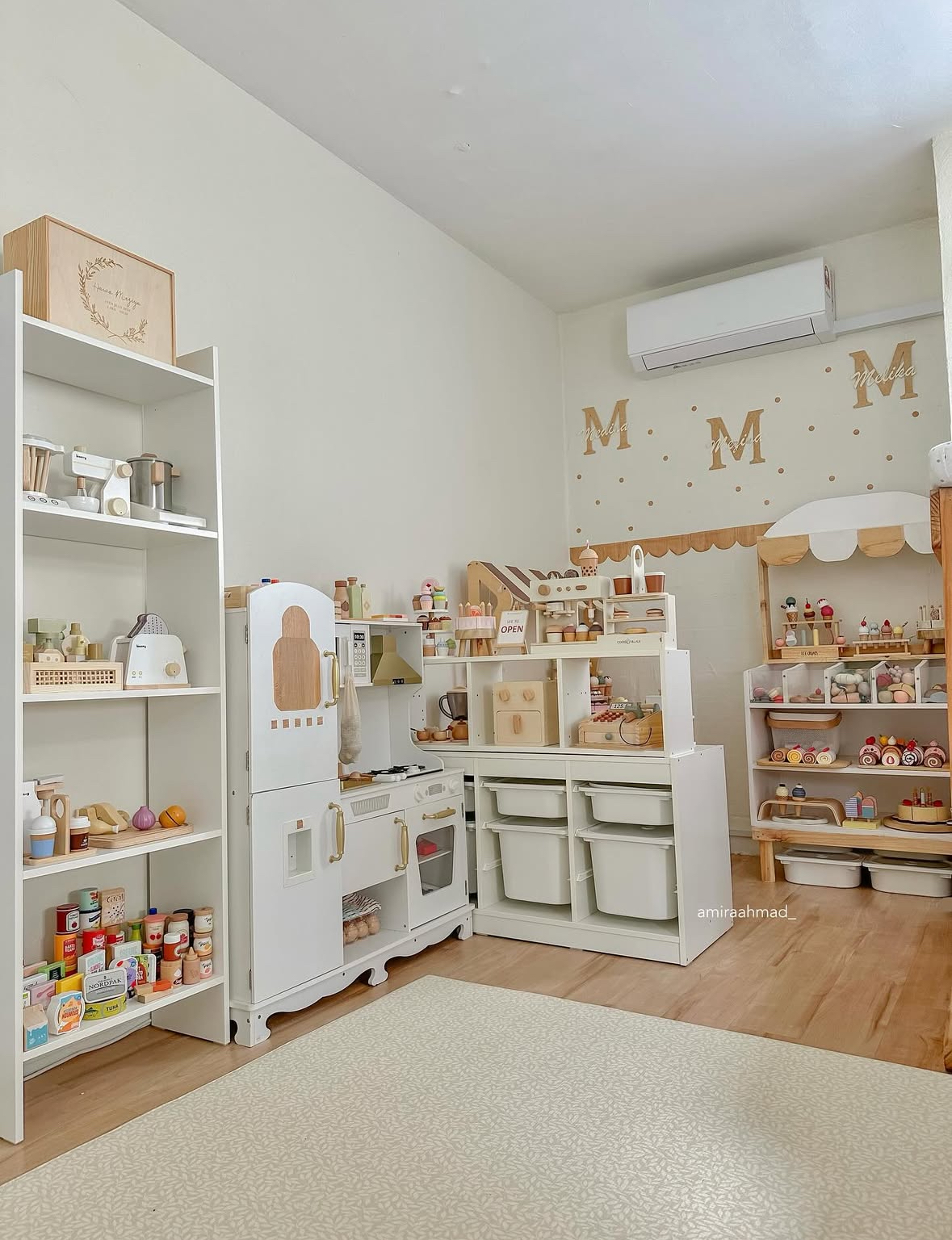
Next to the craft area, a pretend cafe can have its own setup. Activity-based storage supports independent setup and independent cleanup.
Block and Build Zone
A rug can define the building zone while keeping the surface open for blocks. Provide low storage, and minimize obstacles so the zone has the open floor that blocks require.
In a modern playroom with black walls and a graphic mat, the floor zone stays uninterrupted for large builds. The rest of the room has lower visual noise, and the playroom is attributed to @_squarehouse.
A large bin of blocks near the open floor keeps storage around the perimeter and preserves an open center for block play. The playroom also has a hat wall, and the setup is attributed to @ourmodernplayroom. Keeping a large bin near the building area can reduce cleanup friction.
Place block builds near storage but away from the walkway. Keeping them along the storage line reduces construction-site conflicts, while a block zone in the walkway causes an obstruction.
Playroom Zones
Walls can separate the zones without requiring extra furniture. Bright lighting keeps the room warm rather than clinical, and light in the corners helps those areas function as usable parts of the playroom.

A storefront wall with a striped awning, arched doorway, and small windows defines the pretend-play corner. The muted gray-green wall color keeps the space calm and a little elevated, while built-in cubbies support cleanup. Together, the play corner can feel playful yet integrated with the rest of the house.
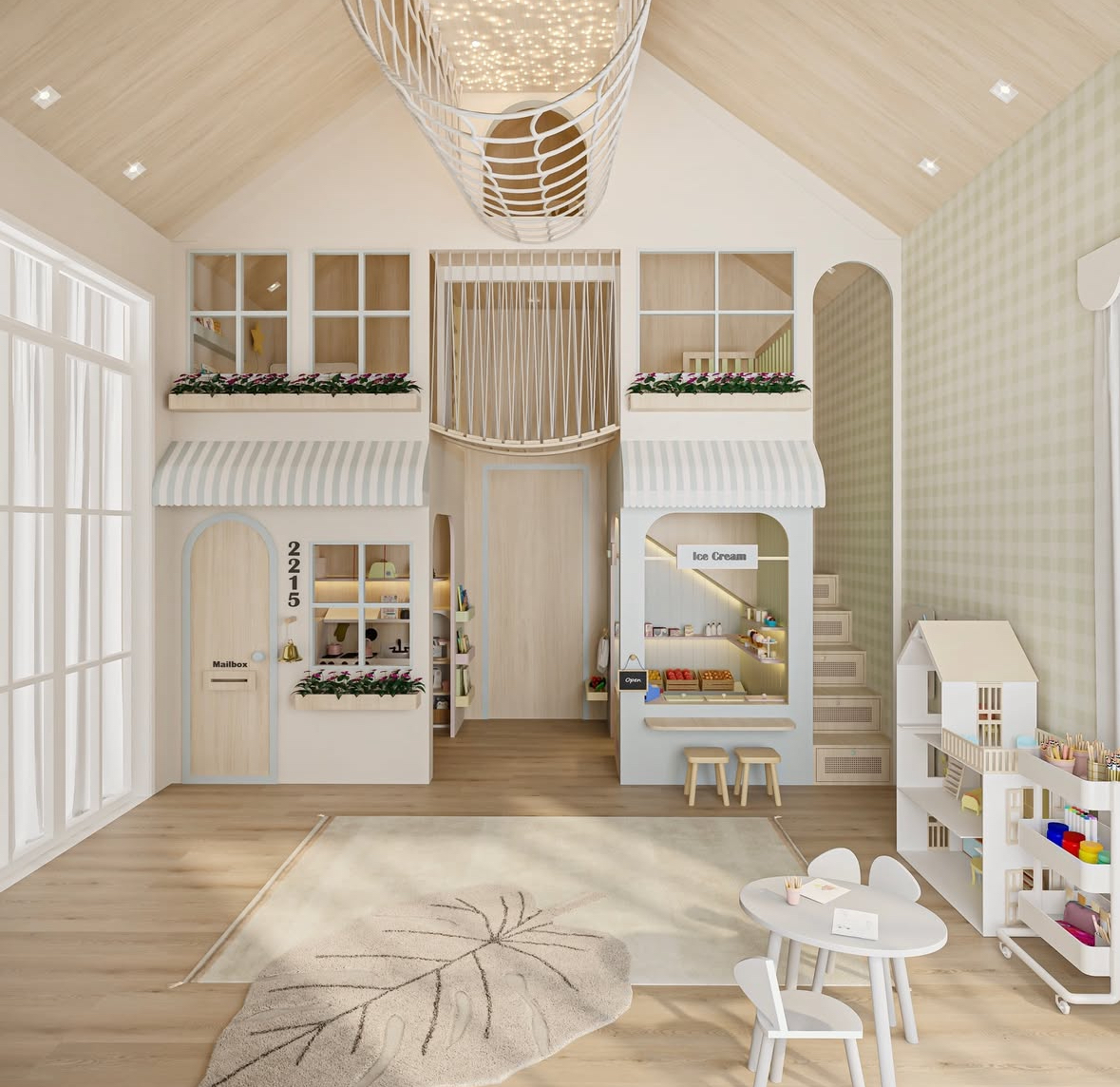
A statement net light hangs above the room, while the large open rug area stays clear from the two storefronts used for pretend play. The village-like playroom remains airy, bright, and organized, with room for both blocks and crafts.

The climbing wall creates a boundary for active play in the loft and can reduce the need for extra furniture. Pastel climbing holds keep visual chaos low, while a skylight illuminates the space. A foam pit paired with a soft seating platform supports contained play and supervision.
Playroom Seating
Seating near the books supports reading, and a stool near the crafts gives children a place for a more settled activity. When seating is lacking, toys can spread across the room more easily.
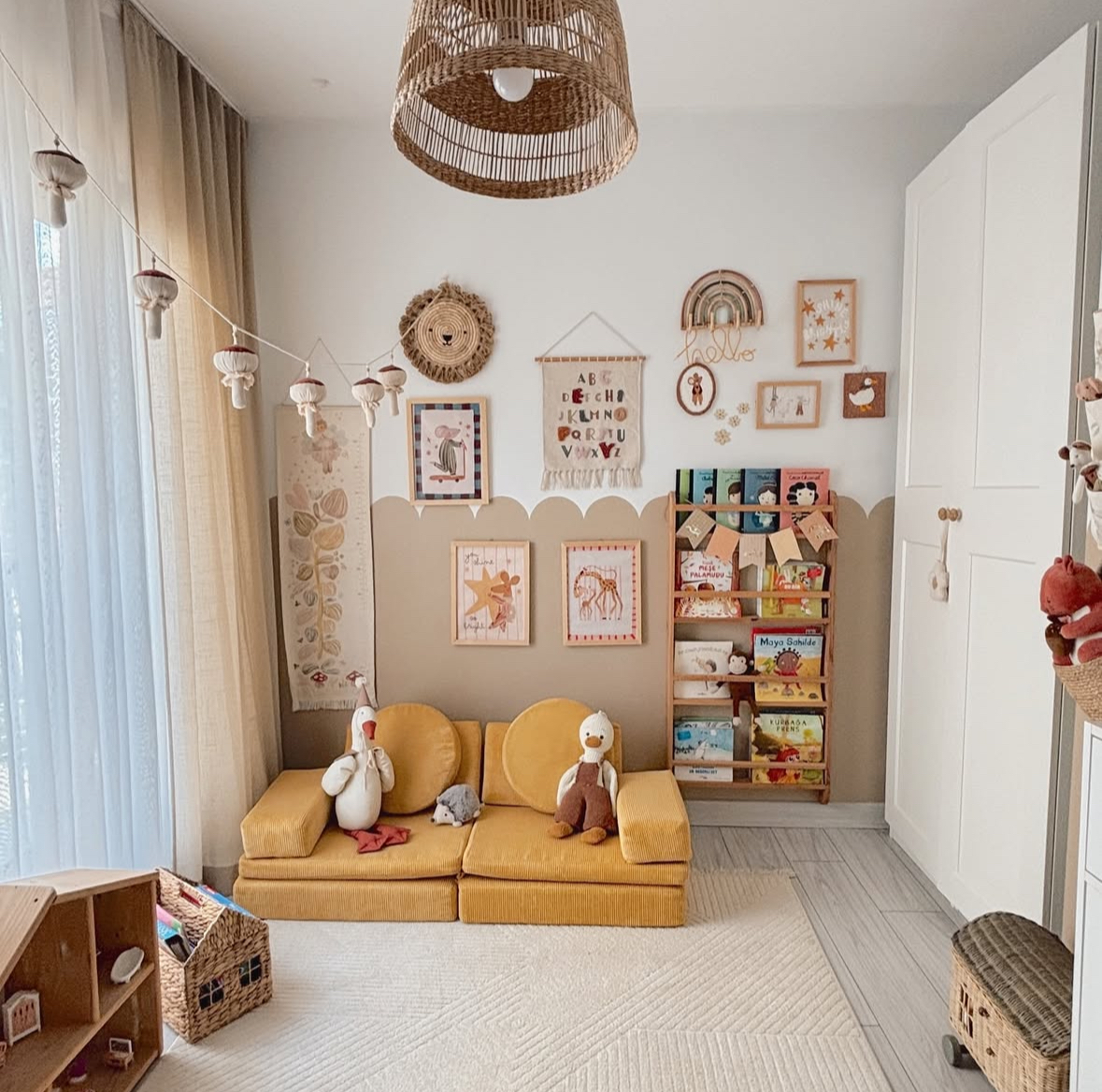
A kid-friendly scale keeps the chair suited to a small book corner. It supports book-corner use while taking up less space than a large adult chair.
The large pouf in the sage built-in room has enough flexibility for lounging and reading, and it provides a soft landing. A round table with cozy, appropriately scaled chairs gives the crafts area more structure.
Use soft perimeter pieces around large-movement zones such as slides, foam pits, and ball pits. Keep clear sightlines through these areas so movement and supervision are supported.