

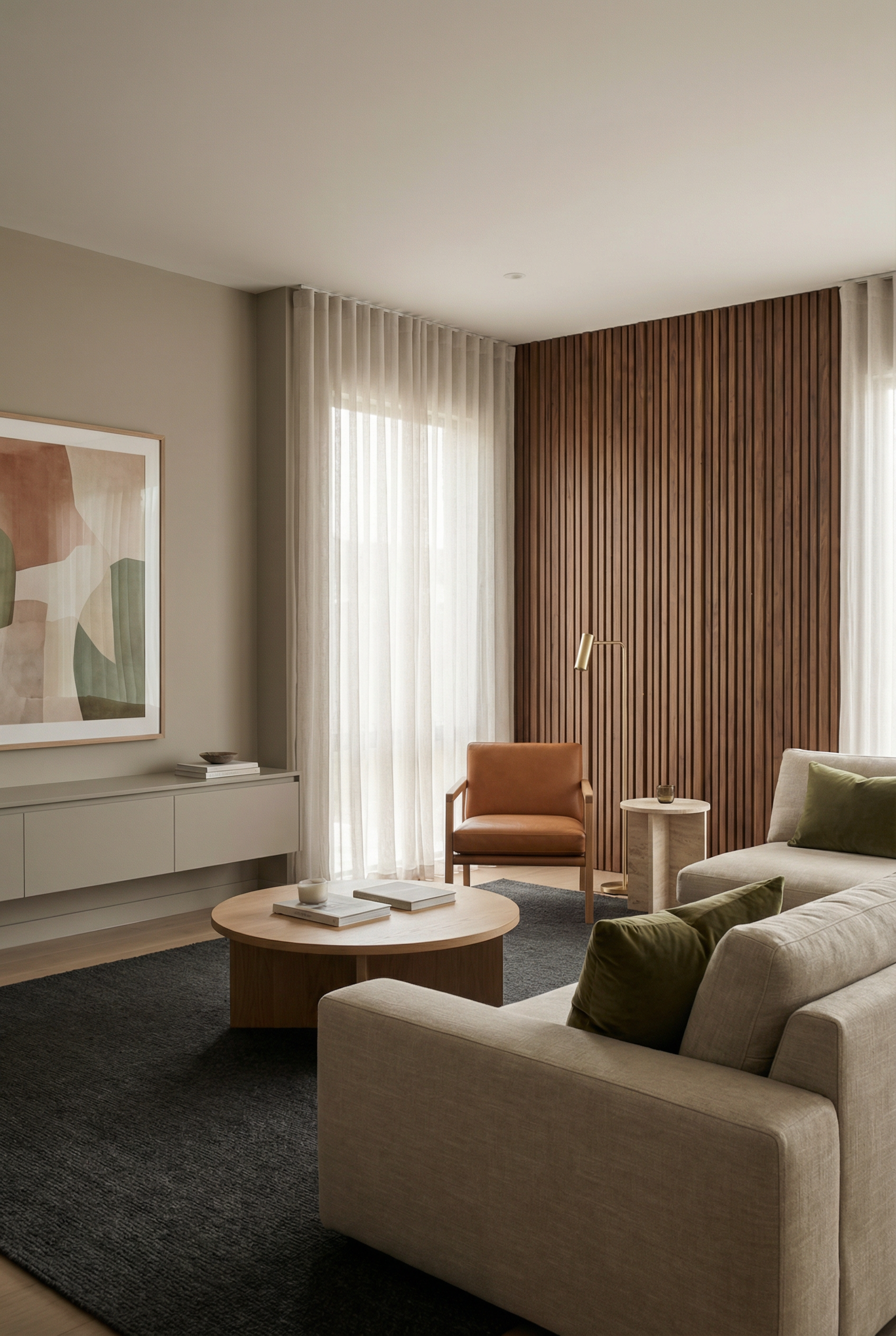
Modern living rooms may look flawless online yet feel cold or incomplete at home. Modern living rooms can be beautiful but are surprisingly easy to get wrong: Modern design often appears calm, clean, and perfectly considered in photos, yet recreating it at home can leave the room feeling cold, echoing, or unfinished, as if only half the decorating happened.
If that sounds familiar, you have not failed. Modern rooms are sensitive to scale, layout, texture, and lighting, and modern design does not mean following one strict style. The most inviting modern living rooms often combine the warmth of Scandinavian living room design, the structure of mid century modern living room style, and the simplicity of contemporary living rooms, while a touch of modern farmhouse coziness or rustic texture makes the space feel more personal and lived in.
Make practical decisions about the palette, layout, furniture, styling details, and lighting to create a functional living room that feels stylish, welcoming, and calm.
Modern Palette
Overly cool, flat, or shiny palettes can make a room feel cold. Choose a warm or deep palette, then pair it with clean lines and soft finishes.
Use a base neutral on the walls and large upholstered pieces, then add a grounding element and one point of interest to complete the modern palette.
Use wood or a deep tone as the grounding element, then add interest with a muted color, bold accent, warm leather, or olive velvet.
Matte paint and honed stone can feel calming, while brushed metal adds another finish option. Using gloss throughout can make a modern interior feel hard and echoing.
A Set of Four Modern Functional Color Schemes
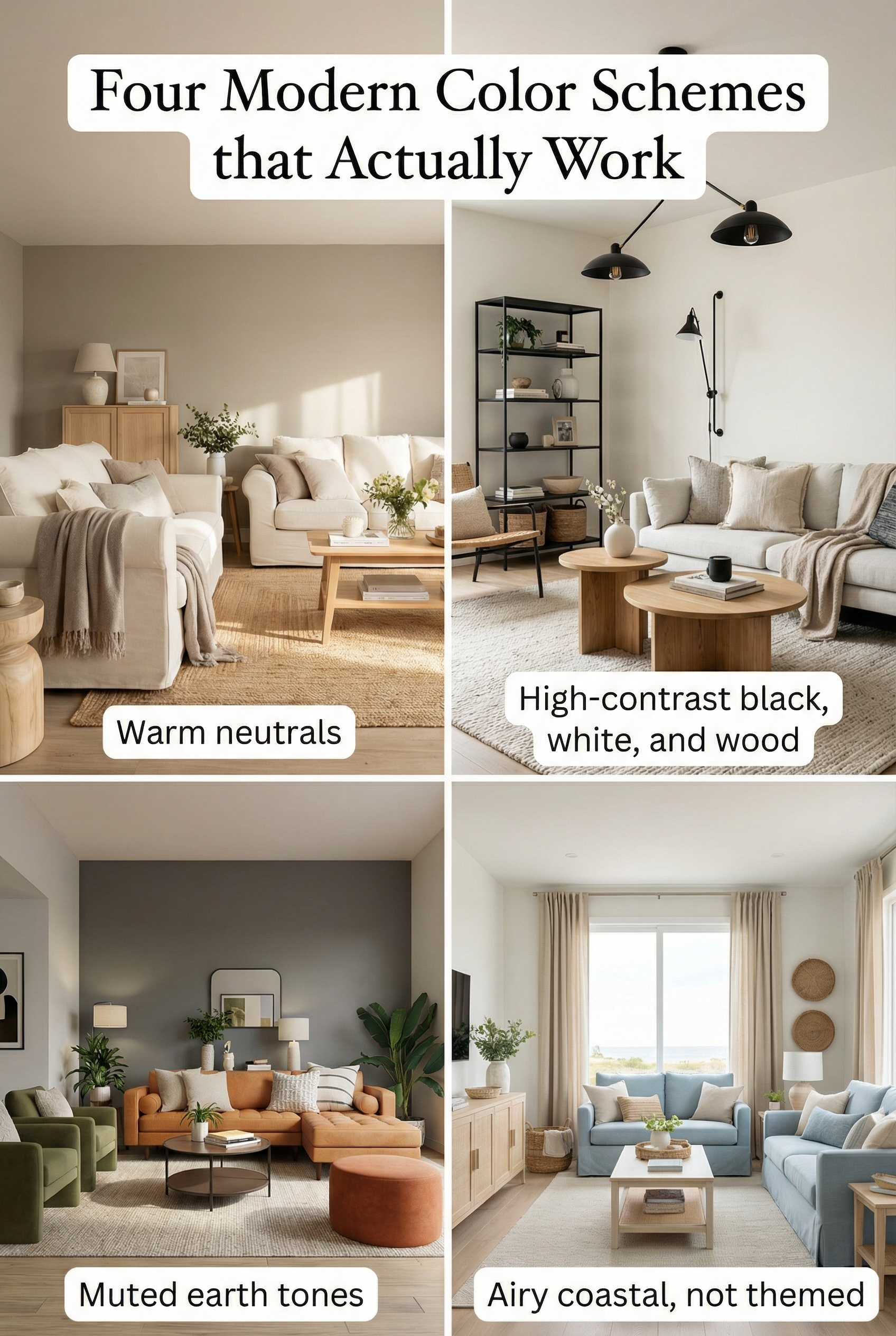
Warm neutrals in creamy white, warm greige, soft taupe, and pale oak can create a bright living room while retaining a cozy, lived-in atmosphere. They are also associated with Scandinavian style.
Wool, linen, leather, and woven details add texture. A high-contrast scheme of matte black, warm white, and natural wood can feel sharp without texture, so include those softer material details.
In urban living rooms, muted earth tones such as clay, camel, olive, rust, and soft charcoal can provide warmth. They can combine a cozy atmosphere with modern style.
Soft blue, sandy neutral, and pale wood can create a beach-house atmosphere without making the room feel themed. Keep the style natural and quiet, and avoid obvious coastal decor.
Tall Wall Decor
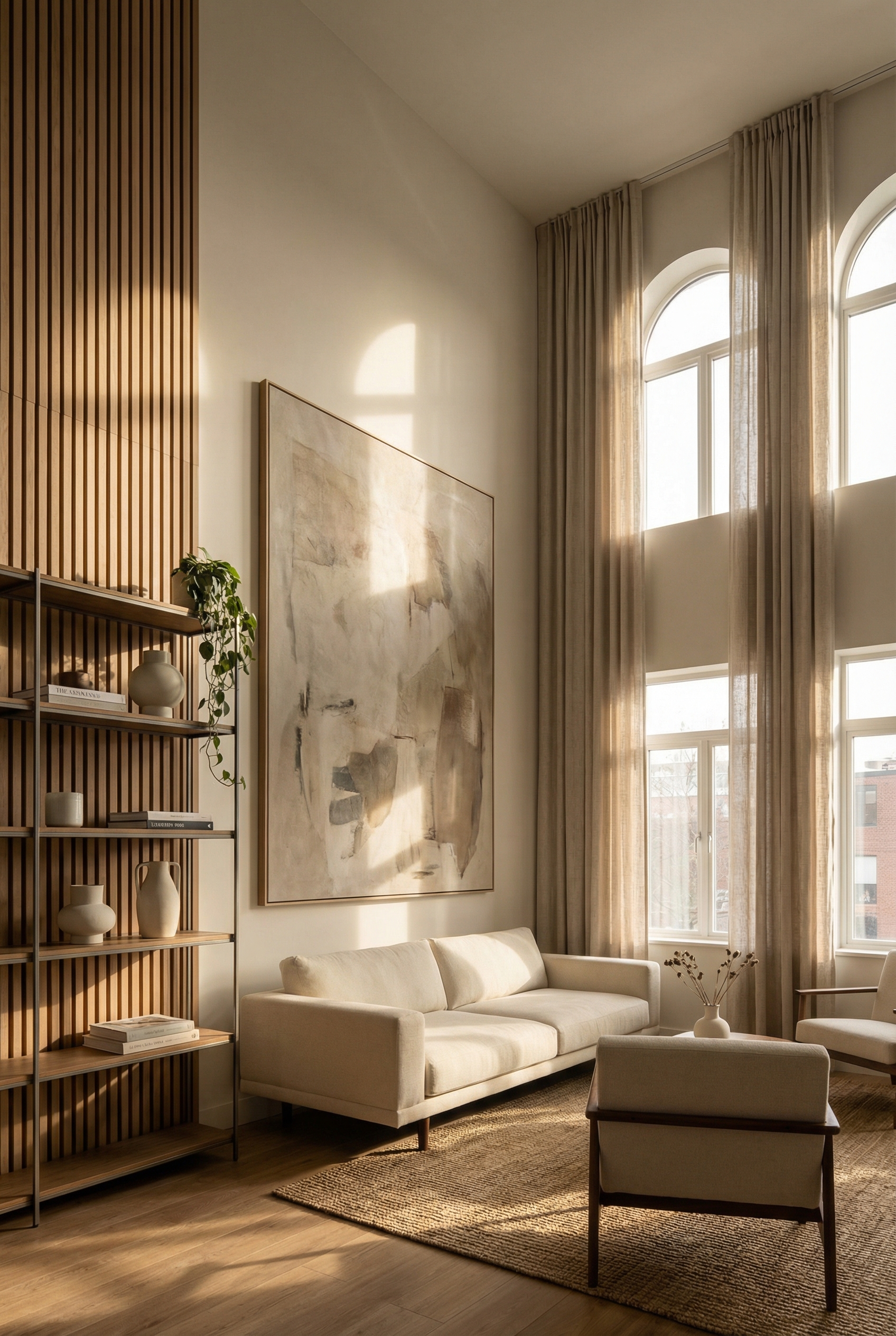
Use tall decor to give empty-looking walls more presence. Oversized art fills more of the wall area, while floor-to-ceiling curtains draw the eye upward. Hang the curtains high to use their full height, raising the curtain rod near the ceiling and extending the panels until they reach the floor. This placement can make the room feel taller and more intentional.
If the art is too small for the wall, it can leave the room feeling unfinished, especially around 3:30 pm when afternoon light falls on it. A subtle wall-paneling treatment, such as vertical slats, adds height and structure to the surface. Lightly styled, tall shelving uses vertical space without looking crowded, but avoid overstuffing the shelves.
Modern Living Room Layout for Function
Even a sofa, rug, and two chairs can fit poorly when the layout is not planned carefully, obstructing circulation. A modern living room layout should feel open and calm, support easy movement, and prioritize ease without requiring an empty room.
Sofa and Sectional Placement

For small living spaces and narrow rooms, a sofa keeps sightlines light while providing flexibility. In open-concept homes, a sectional defines the living zone and creates a gathering spot.
Before settling on a piece’s position, check the walking clearance through the room. If a piece is too large or misplaced, you may be unable to walk normally along the path, so start by considering how each piece supports movement.
Place the seating on a rug to anchor the arrangement and give it a more intentional look. Keep the main walking path clear as it connects the entry and kitchen and may include the hallway. If a sofa floats in the room, use a slim console behind it to keep the sofa from looking lost.
Accent Chair Placement
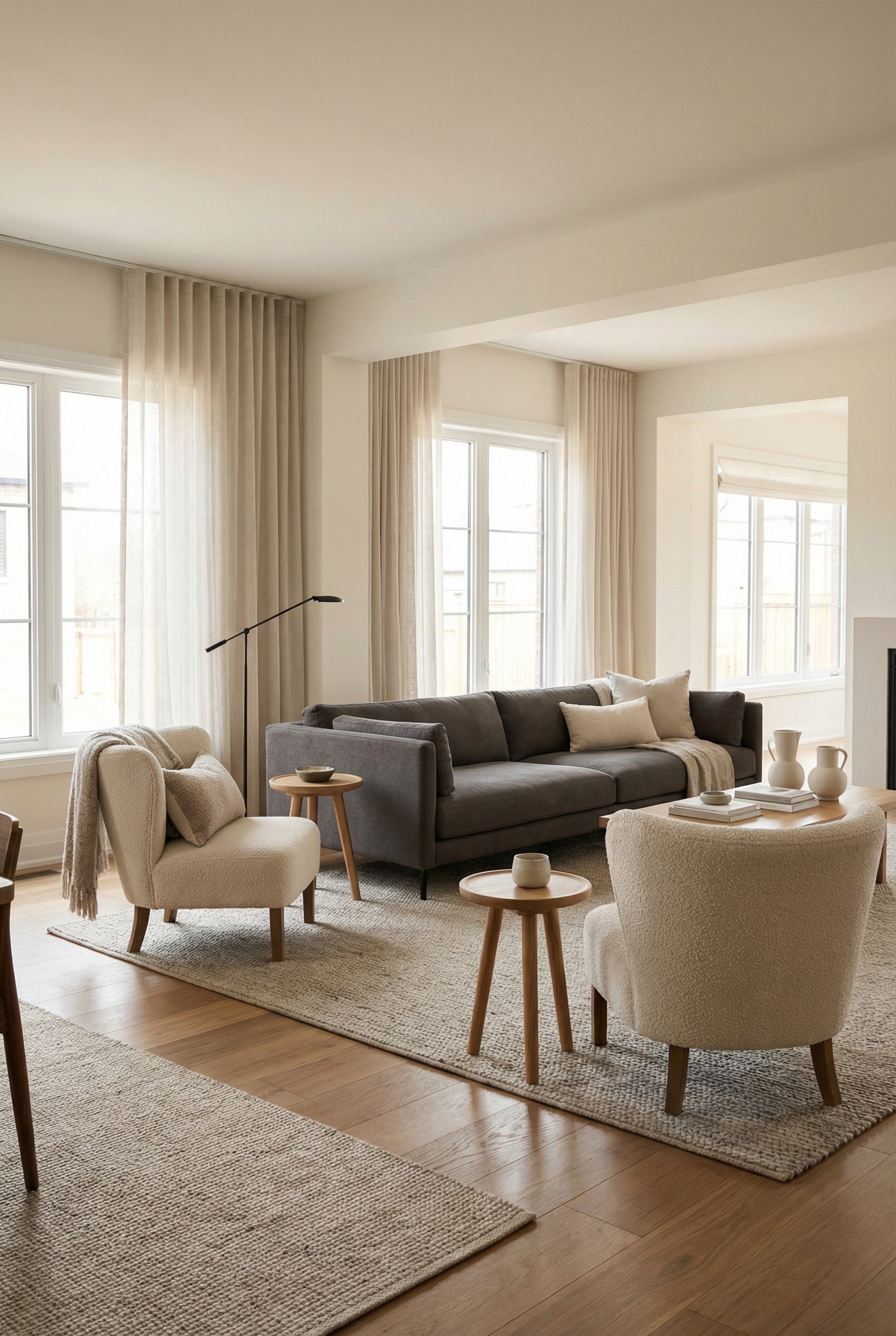
Place accent chairs outside isolated corners so they participate in the room rather than sit apart from it. Angle each chair slightly toward the sofa and keep it close enough to support conversation. Provide a side table and a lamp near each chair so both are within reach; nearby light and a place for a drink make the chair more inviting and usable.
TV Mounting Distance

For a 55-inch TV, allow about 7 to 8 feet of viewing distance, and for a 65-inch TV, keep the viewing distance at 8 to 10 feet. Mount the TV lower than you might expect, since excessive height can contribute to neck strain. A TV mounted above a fireplace can have a console below it, and a lower console can make the TV appear lower.
Pathways for Walking
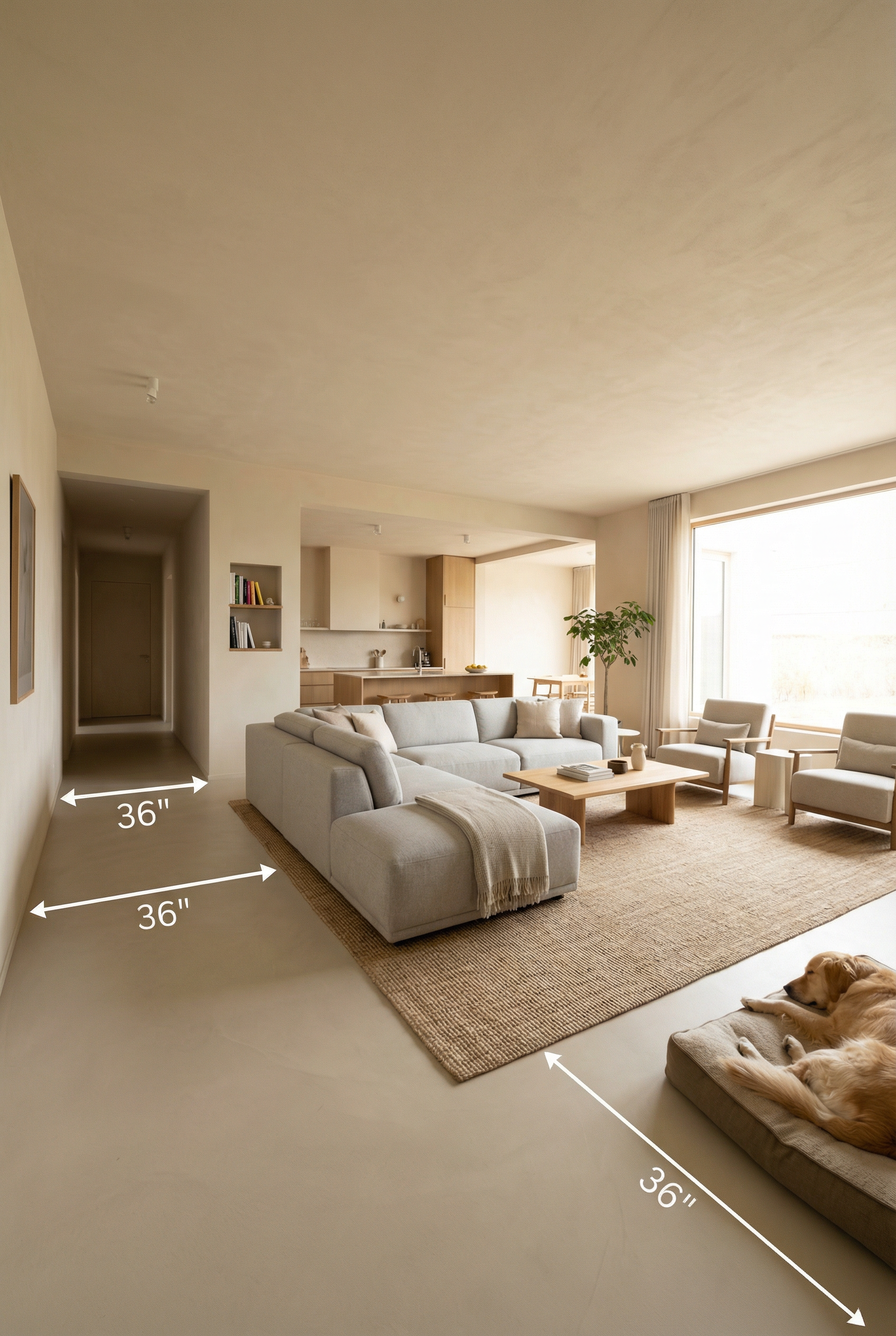
Allow 30 to 36 inches for the main paths. Adequate clearance supports easy movement.
With children and a dog in the household, protect the main path as a high priority. Keep it clear enough for everyone to move through safely.
Rug Sizing for Modern Rooms

A 5 by 8 rug suits a small living space and may cover the coffee-table area, with the front legs of the seating barely on it. An 8 by 10 rug suits most rooms, with the front legs of the sofa and chair resting on it. A 9 by 12 rug suits open plans and large rooms, providing enough coverage for all the seating.
In a small apartment, a 5 by 8 rug can work with a sofa and one chair, while an 8 by 10 rug often looks more finished. In an open-concept living space, a 9 by 12 rug suits a sectional and keeps the arrangement from becoming a tiny rug island.
Room Shape Checklist
In a narrow room, place the sofa away from the walls to create a floating arrangement. A round or oval coffee table can soften the layout, while slim-profile chairs preserve comfortable walking space. Add a console behind a floating sofa. In an open-concept room, use a sectional and a large rug to define the living zone. In a square room, slightly break the symmetry by offsetting the chairs and using an asymmetrical lamp setup.
Mark the floor with painter’s tape for the 5 by 8, 8 by 10, and 9 by 12 rug sizes to save money.
Streamlined Furniture
Cozy materials can make modern furniture comfortable, while clean shapes and good proportions keep its form clear.
Flexible Seating with Sofas and Sectionals
A sofa supports flexibility and easy rearranging, with a lighter visual presence than a sectional. A sectional provides built-in seating for a hangout zone and reduces the need for multiple chairs.
Look for modern silhouettes with simple arms, lower profiles, and intentional bases. Sofa arms may be track, sloped, or soft and rounded. Choose lower-profile furniture with a clean base; legs can be made of wood or metal, while the base can have a sleek, hidden style.
Modern Materials for Living Well
In minimal rooms, boucle can soften the look without losing its sculptural form, while its texture brings a cozy feel. A linen blend has a slightly rumpled appearance that keeps the room airy and relaxed. In a mid-century modern living room, leather offers durability and timeless style. Wood and metal create contrast through their different surfaces, and their modern structure suits contemporary rooms.
Shopping Price Ranges
- The budget tier ranges from $500 to $900.
- The mid-tier ranges from $1,000 to $2,000.
- Premium-tier prices start at $2,500 and go higher.
Mixing price tiers can put more of the budget toward the sofa while saving money on side tables. Before buying, measure the sofa depth and seat height. Deep modern sofas may feel comfortable, but they can also contribute to back pain.
Modern Styling With Bold Accents and Minimal Decor
An edited room uses intentional restraint, but that does not mean it should feel empty. Modern styling keeps the space considered rather than crowded.
Prioritizing function helps the room remain useful as well as attractive.
The Three Item Rule
Three items on a surface can create a balanced arrangement, while three pillows on a sofa can make it feel relaxed. Using three materials in a vignette can also make the arrangement feel intentional.
On a coffee table, ignoring the rule of three can produce a collection of random objects.
Texture Layering for Coziness Without Clutter
Layer textures throughout the room to create variation without relying on clutter. Soft textures such as throws, rugs, and pillows can be balanced with hard textures like stone, metal, and wood, which connect the room’s surfaces. Plants and baskets add organic texture while keeping natural elements visible, making a minimalist living room feel inviting.
One Bold Accent
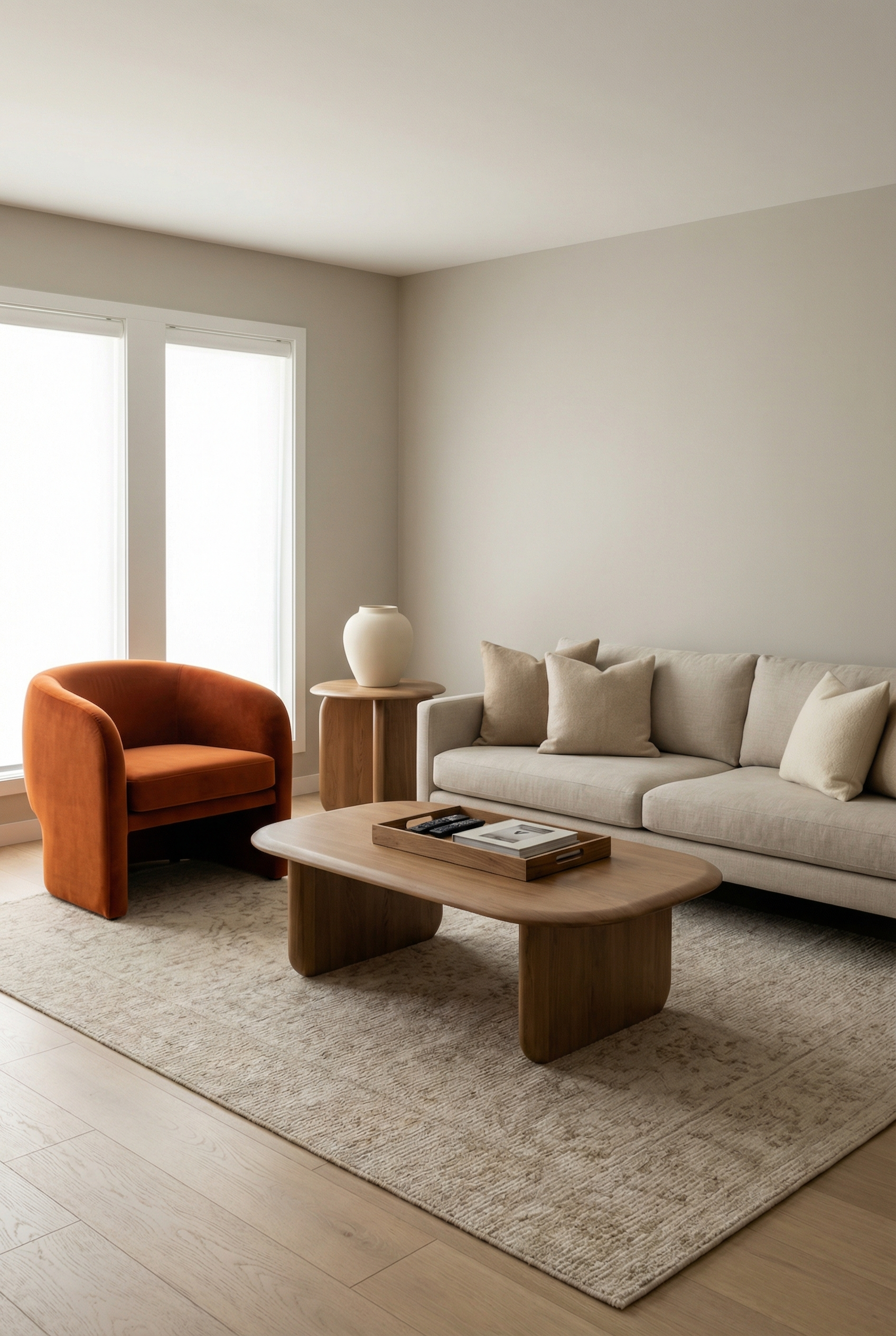
Choose one bold accent in each zone—such as a rug, piece of art, or chair—and support it rather than adding competing accents. This restraint keeps a modern room from feeling visually noisy, while coordinated pillows and matching lamps can reduce decision fatigue and help bring the room together. Clear the coffee table, then return only three items; the restrained arrangement can make it look more modern.